Building accessibility

Building accessibility

Clients rarely start by asking which platform lift to buy. They start somewhere else: a wheelchair user needs to get to us, and between them and the office there are entrance steps, a vestibule and a half-storey. This page explains how such a task breaks down into solutions and how much building work it involves.

  • 8contracts for lifts adapted to people with reduced mobility
  • UAH 21.2munder those contracts - Lviv housing stock
  • No. 1740listed building with an external lift in Chernivtsi

Accessibility is a route, not a set of devices

The wording is not ours: it comes from DBN V.2.2-40:2018 "Inclusiveness of Buildings and Structures", the Ukrainian building code on accessibility. The code requires continuity: a person must be able to get all the way from the site boundary to the very office they are heading for. That is exactly what the designer and the expert review look at.

The consequence is unpleasant. A device placed in the middle of a broken route does not solve the problem. We visit buildings where the platform lift at the entrance is already working, yet the person still cannot reach the office they need: further on there are three steps that bothered nobody, because the cost estimate said "platform lift" and that was taken as the answer.

That is why the conversation starts not with a model but with a walk round the building with a tape measure. The opposite mistake is no better: the device is chosen last, when the openings and dimensions have already been drawn, and then people search the standard ranges for one that will fit. Sometimes there is none at all.

A fork in the road: four different solutions

These four options get mixed up in tender documents more often than anything else. People write "lift for people with disabilities" when the site needs a vertical platform lift. Changing that after bids are opened is almost impossible. And the machine itself is almost always the smaller part of the cost.

Vertical platform lift

DSTU ISO 9386-1
When it makes sense
There are one or two levels to overcome: the entrance steps, a raised ground floor, access to the stage in a hall. A shaft for a full-size lift either has nowhere to go here or makes no sense.
What it involves
Besides the platform itself, the cost estimate covers a pit or an access ramp, guarding, a landing area in front of the device and a dedicated power supply line.
Where it falls short
Low speed, limited travel, and the button usually has to be held down all the way: at an entrance with a constant flow of people, that is a bottleneck. A separate point about the pit: if there is none and nowhere to cut one out, you will need an access ramp, and it takes up the very floor space in front of the device that a cramped lobby is already short of.

Inclined platform lift along the stairs

DSTU ISO 9386-2
When it makes sense
The entrance cannot be rebuilt: a historic building or a narrow apartment-block entrance without a spare metre for either a shaft or a pit. The rail runs along the existing flight of stairs, fixed to the wall or on its own posts.
What it involves
The least intrusive of the four. But it has to be costed flight by flight: a single flight between the entrance and the lobby and three floors with turning landings are different designs and different money.
Where it falls short
It narrows the stair even when folded, which immediately raises the question of escape route width: this has to be settled with the designer before the procurement is announced, not once the rail is already on the wall. Second, the user has to get on and operate it independently, and that does not suit everyone.

Lift with a car suitable for passengers with disabilities

DSTU EN 81-70; in a tight shaft, DSTU EN 81-21
When it makes sense
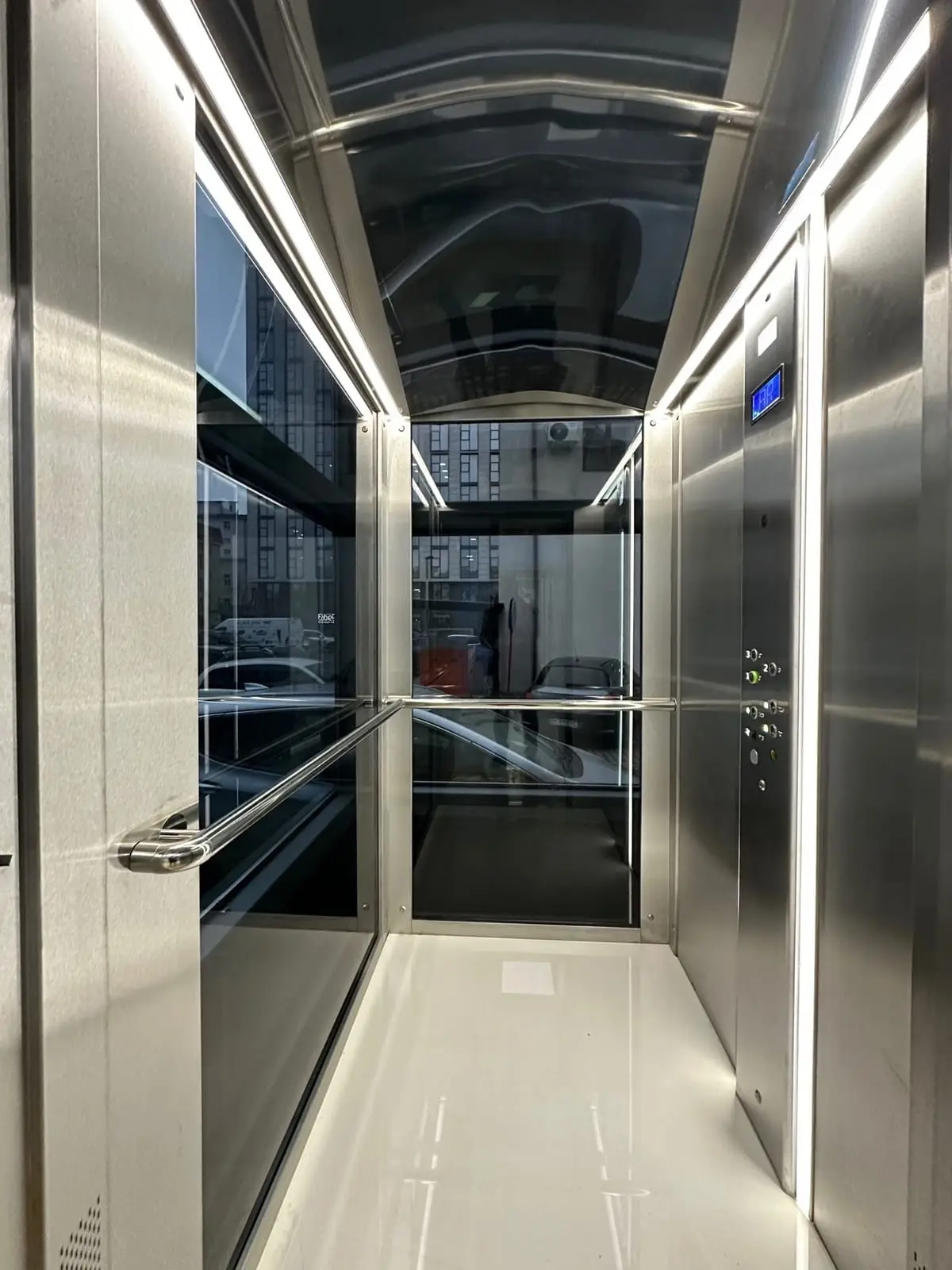
Several floors, a constant flow of people, a hospital with trolleys. The basic specification gets an extra line on car accessibility: dimensions, controls, tactile and audible signals, door behaviour.
What it involves
In an existing building, the equipment comes with shaft work and electrical work: the old cabling and protection are often inadequate for a variable frequency drive. This has to be costed before procurement, not during commissioning.
Where it falls short
The most painful case is old housing stock: a wider car simply will not fit into the existing shaft. Then you either dismantle the shaft or state honestly, before the tender, which requirements of the standard are met and which are not. This is established by a site survey, preferably before the procedure is announced.

External add-on shaft with a lift

DSTU EN 81-70 for the car; the rest is the construction part of the design
When it makes sense
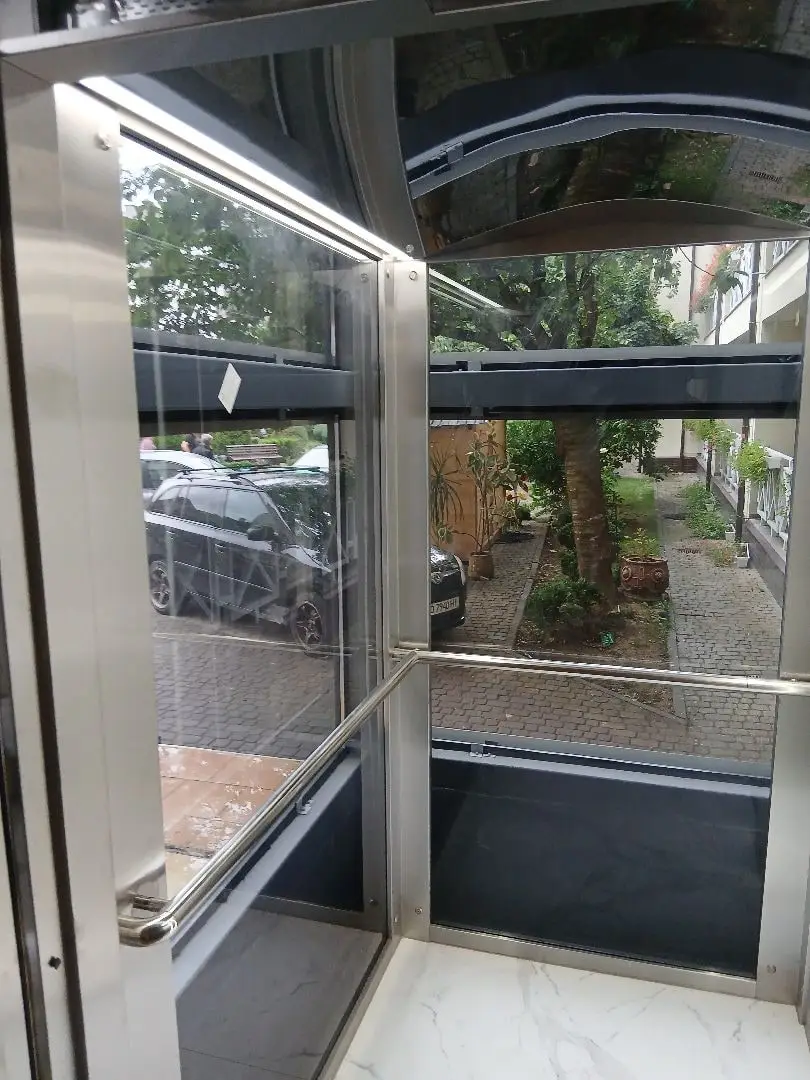
The building was not designed for a lift, and there is no room to intervene inside. The shaft is taken outside: a steel frame stands on its own foundation and adjoins the building wall.
What it involves
Most of the cost estimate here is building work, not lift work: ground investigation for the foundation, the foundation itself, the junction with the building, insulation, roof drainage and, where needed, glazing.
Where it falls short
The longest route in terms of time, not because of installation but because of approvals. In a protected historic area, the cultural heritage protection authority is involved as well.

We do not publish the full texts of the standards: they are sold by SE UkrNDNC, Ukraine's national standards body. What they mean for clients is explained in the legislation section; device specifications are on the platform lifts page.

What needs approval and what is checked at acceptance

The scope of approvals depends not on the device but on what it intervenes in. A platform lift inside a lobby is mostly a matter of design and electrics. As soon as there is an external structure, planning requirements come into play, and in a protected historic area so does the cultural heritage protection authority, where every fixing to the facade has to be justified.

Fire safety is what clients underestimate most often. An inclined platform lift narrows the stair even when folded, so the escape route width should be agreed with the designer before the procurement is announced: after installation it is too late to change. Electrics fall into the same category: a dedicated line, protection, earthing. In an add-on shaft, power is run along the facade or underground, which means different requirements and different money.

And a word on acceptance. A platform lift is often treated like furniture on the stairs, whereas it is lifting equipment with everything that follows from that: a technical passport, an order appointing a responsible person, a contract with a specialist maintenance company, record-keeping. Delays at this stage are almost never technical: the equipment is installed and running, but the acceptance certificate lies unsigned because the paperwork has not been put together.

What we have already done

Only contracts whose subject explicitly refers to accessibility. Amounts are rounded down to the nearest hundred thousand.

External lift at a listed building

Chernivtsi 2024 and 2026

Municipal Enterprise "Directorate for the Maintenance of Jointly Owned Property of Territorial Communities"

over UAH 10.3 million under two contracts

Repair and restoration works to adapt the building for access by people with reduced mobility - an external lift at 1 Hrushevskoho St.

An architectural monument of national significance, heritage register No. 1740. A new shaft could not go inside, so the lift was placed outside, and every fixing to the facade was justified individually.

Contracts: UA-2024-08-05-011578-a and UA-2026-06-26-011590-a

Lifts adapted for residents with reduced mobility

Lviv series of projects

Department of Housing and Infrastructure, Lviv City Council

UAH 21.2 million under eight contracts

Modernization with replacement of lift equipment in residential buildings - adapted to the needs of people with disabilities and others with reduced mobility.

Work in occupied buildings: the entrance stays in use and residents are notified in advance.

Contracts: 8 in total

Platform lift in a polyclinic building

Ivano-Frankivsk 2024

Ivano-Frankivsk District Quartering and Maintenance Unit

over UAH 1.4 million

Fitting building No. 5/1 (polyclinic) at 2a Starozamkova St. with barrier-free access equipment for people with disabilities and others with reduced mobility. The device is an enclosed vertical platform lift.

A Ministry of Defence facility. Besides supplying the platform lift itself, the contract covered its installation and commissioning as well as the related construction and finishing works: when an existing building is retrofitted, the building work comes as one package with the equipment. The client sent a letter of reference, No. 1/1393 of 13 August 2024.

Contract: UA-2024-04-09-008701-a, contract No. 183 of 08.04.2024

Platform lift in an academic building

Lviv 2024 and 2025

Lviv National Academy of Arts

two contracts

Major overhaul with installation of a lift at 35-B Kubiiovycha St., plus, as a separate procurement, a platform lift for people with special needs.

An academic building in the city centre, subject to the constraints of a historic area. The lift and the platform lift went through two separate procedures, so the subject of each was described separately: there was no way to confuse them in a single lot.

Contract: UA-2024-03-19-013062-a - for the lift; the platform lift was procured separately in 2025

Data from the open register for EDRPOU 33860532: signed contracts in which the company is the contractor, not mere tender participation. The full list is in the Prozorro register.
Quick answers

Accessibility: frequently asked questions

We need to make our building accessible. Where do we start - with choosing the equipment?

With the route. Walk the path a wheelchair user would take, from where they get out of the car to the office they need, and note down every change in level, every threshold and every narrow door. The equipment is chosen to fit that list, not the other way round. DBN V.2.2-40:2018 "Inclusiveness of Buildings and Structures" specifically requires a continuous route, so a single platform lift does not solve the problem on its own.

In the tender we will write "lift for people with disabilities". Is that enough?

No, and it is the most expensive mistake in accessibility projects. A lift, a vertical platform lift and an inclined platform lift are three different machines with different standards and cost estimates. The subject of the procurement is fixed before bids are opened, and changing it afterwards is almost impossible. If you need a platform lift but write "lift", you will get the wrong thing or nothing at all.

Our building is listed. Is a lift possible at all?

Yes. Our working example is 1 Hrushevskoho St., Chernivtsi: heritage register No. 1740, national significance, an external lift, two contracts (UA-2024-08-05-011578-a and UA-2026-06-26-011590-a) totalling over UAH 10.3 million. Be prepared for a different timetable: restoration approval is a separate stage, and on projects like this it regularly takes longer than the installation. It has to be built into the plan from the start, not once the equipment has already been ordered.

How much does it cost to make an entrance accessible?

Not without a site survey, and anyone who names a figure over the phone is guessing: the difference between "putting a platform lift on a ready-made base" and "building a pit, running a dedicated power line and rebuilding the entrance steps" is several-fold. A better benchmark comes from the public register: equipping a polyclinic in Ivano-Frankivsk for barrier-free access cost over UAH 1.4 million, contract UA-2024-04-09-008701-a. The survey and the calculation are free of charge.

An inclined platform lift is cheaper. Why don't you always recommend it?

We do recommend it where it fits. Before specifying one, you need to answer three questions. How much of the stair width will remain after installation, and does that meet fire safety requirements? How many flights actually need to be covered, given that every turning landing changes the task? And can the particular user get on and operate it independently? If all three answers are satisfactory, it is the quickest and cheapest solution available.

The platform lift is installed. Can we forget about it now?

No. A platform lift is subject to the same rules as lifts and other lifting equipment: it needs a technical passport, an order appointing a responsible person, a contract with a specialist maintenance company and proper record-keeping. A scenario we see regularly: the platform lift was put through as a separate budget line "for accessibility", installed by the builders, and the matter was considered closed. A year later it stands switched off with nobody to maintain it, yet it still counts in the building's accessibility reports.

The range of platform lifts and other lifting devices we supply under our own trademark is collected on a separate page, the LIFTPORTAL catalogue, with specifications for twelve models and a downloadable PDF.

Let us work out accessibility for your building

Tell us what kind of building it is and where people need to get to. We will come out, measure the route and tell you which solution is appropriate and what it will involve.

Or leave your number and we'll call you back

We'll call you within one working day. The site survey and pricing are free of charge.

Or just give us a call: +38 (050) 585-39-28 ·+38 (063) 283-31-48 ·+38 (096) 901-76-50