Lift modernization and replacement
Replacement of worn-out equipment without reconstructing the building.
Replacement of worn-out equipment without reconstructing the building.
We replace lifts that have reached the end of their designated service life. We select equipment to fit the existing shaft dimensions, so major building work is usually not required.
Modernization starts with a survey. We pull out the passport and check the guide rails and their fixings, the landing doors and their locks, wear on the ropes and traction sheave, backlash in the gearbox, the steelwork and the electrics. Then an expert organization issues a report: extend the service life, replace some components or replace the lift entirely. Until that report exists, any cost estimate is guesswork.
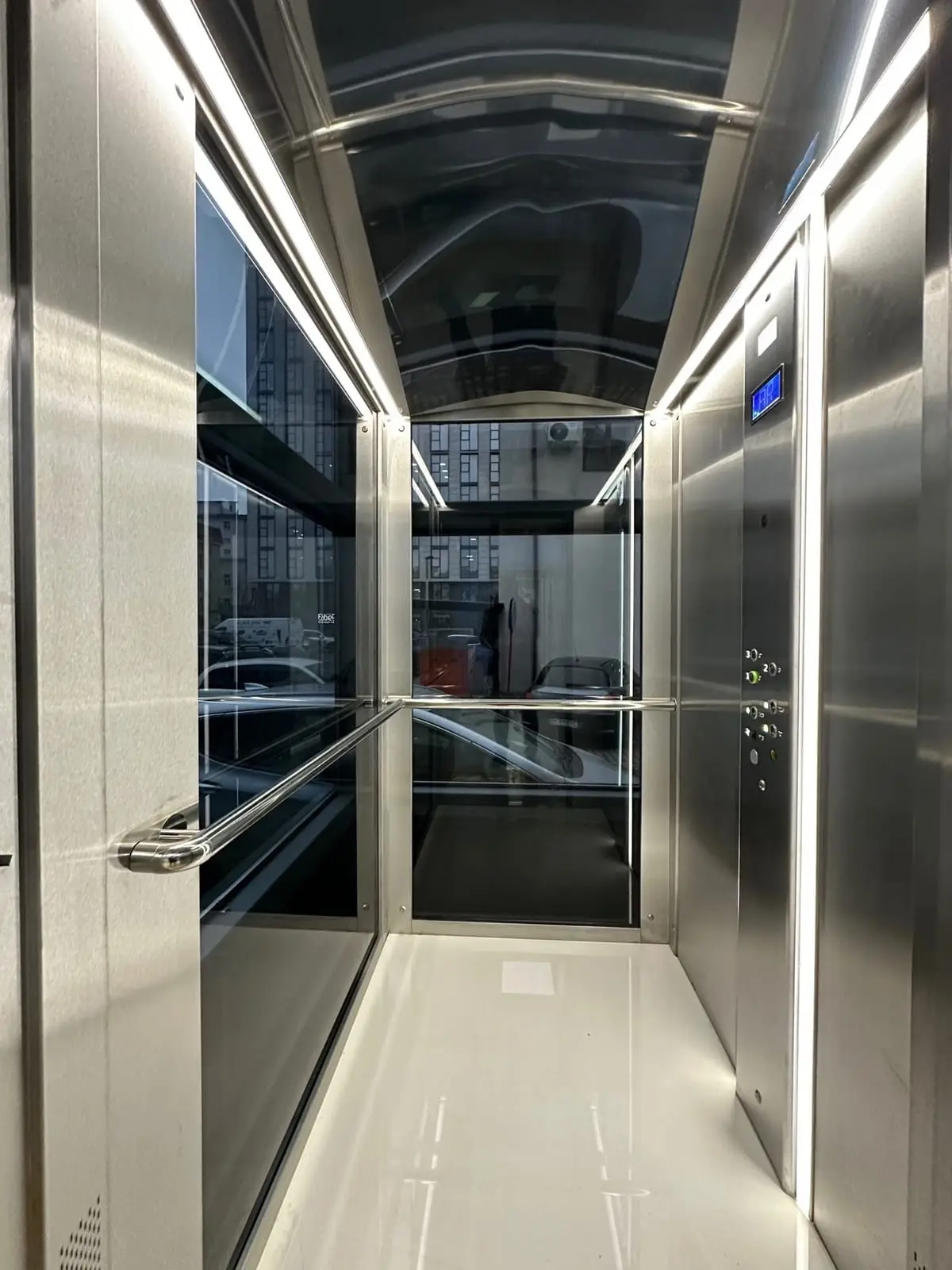
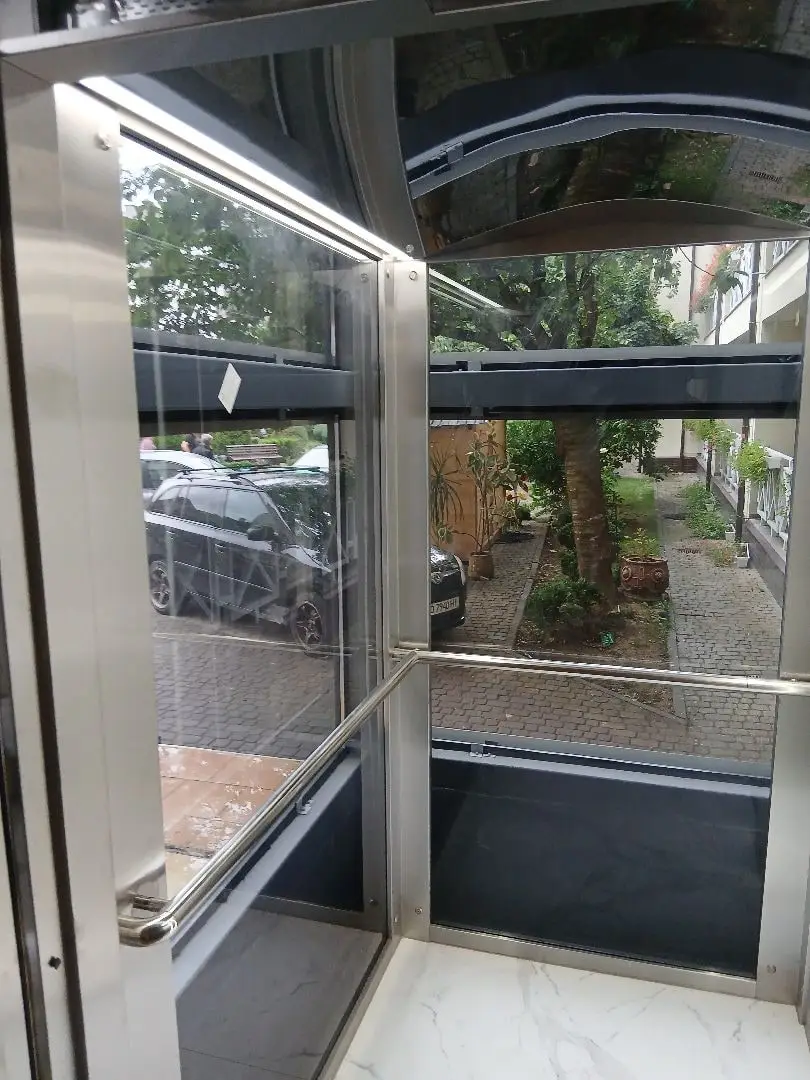
Modernization changes the design so as to raise the lift's safety and technical standard while keeping its main characteristics: rated load, speed and number of stops. In practice, the controller is most often replaced with a microprocessor-based one, variable frequency control is fitted to the main drive and the door operator, and the car enclosure, doors, call stations and indicators are renewed. Afterwards the lift stops level with the floor, runs more quietly and uses less electricity when accelerating.
Full replacement is justified when the mechanical parts themselves are worn out. We dismantle the old equipment, remove the scrap metal and install new equipment to fit the existing shaft dimensions - major building work is usually not required. The exception is a shallow pit or low headroom: in that case either the pit is deepened or a model with a reduced rated speed is chosen. We agree on this option before the contract is signed, not while the work is under way.
Everything concludes with testing, a declaration of conformity for the installed equipment and a new entry in the passport. For OSBBs and housing cooperatives we also prepare a defect report and cost estimate - without them you cannot apply for co-financing, and programme requirements change every year, so we check the form before submission. The period when the entrance is without a lift is agreed in advance, and we try not to let it drag on.
The service is available for all lift types in our catalogue.
For warehouses, factories, shopping centres and kitchens.
For hospitals and medical centres: sized for stretchers and intensive care beds.
A glass car as an architectural feature of the building.
MRL - the equipment is housed inside the shaft.
Partial modernization is cheaper at first, but only makes sense when the mechanical parts and steelwork are still in working order. If the guide rails, landing doors and traction machine are worn, a new controller will simply extend the old lift's life by a few years, and you will end up paying twice. We make the decision based on a survey, not over the phone.
Yes, and in many buildings it is the only realistic way. Work usually starts with the controller and the drive - this gives the biggest gain both in safety and on the electricity bill. Then come the car enclosure, landing doors and landing call stations. The key is to describe all the stages in a single technical solution; otherwise the components will not fit together.
In most cases, yes: manufacturers have product ranges for the standard shaft sizes found in residential buildings. The problem areas are a shallow pit and low headroom. The options are to deepen the pit, choose a lift with a reduced rated speed, or go for a reduced-headroom solution with additional protection of the working space. A site survey will show what is possible in your case.
It depends on whether it is a full replacement or an upgrade of individual components, and on the number of stops. We give specific dates after the survey and fix them in the contract. We also agree separately with residents on access to the entrance and where the dismantled equipment will be stored, because that is what causes most conflicts.
Full cycle: from shaft design to putting into operation.
Scheduled inspections, emergency call-outs, record keeping.
Continuous communication with the car and equipment condition monitoring.
Escalators and moving walks for shopping malls, railway stations and metro systems.
When replacing individual lift components is enough, and when a new lift is cheaper. Decision criteria, timelines and what happens to the shaft.
5 min readWhy the price is not quoted over the phone, which items actually make up the cost of a lift replacement, what drives the cost up and which benchmark you can check in the open register.
9 min readChoose what you need: an engineer will contact you within one working day, select a model and calculate the cost.
Or just give us a call: +38 (050) 585-39-28 ·+38 (063) 283-31-48 ·+38 (096) 901-76-50