Maintenance
Scheduled inspections, emergency call-outs, record keeping.
Scheduled inspections, emergency call-outs, record keeping.
Scheduled lift (elevator) and escalator maintenance to Ukrainian NPAOP safety rules. We keep technical records and prepare equipment for third-party inspection.
A maintenance routine is not a case of "came, looked, left". Every month the lift technician checks the landing door contacts and locks, the condition of the ropes (for broken wires and excessive elongation), the traction machine brake, the gearbox oil level, levelling accuracy at the floors, car and shaft lighting, the Stop button and the intercom link to the dispatcher. The pit must be dry and clean - that is also part of the inspection, not housekeeping.
Periodically the lift undergoes a technical inspection: a partial one without load tests, and a full one with static and dynamic tests. The intervals are set by the rules and recorded in the passport, and we prepare the equipment and documents in advance, because a defect found on inspection day takes the lift out of service. We keep the passport, the maintenance log and the log of inspection orders ourselves: these are the papers inspectors look at first.
From experience: most emergency call-outs are not a broken traction machine. They are misaligned door contacts, an object stuck between the door panels, smashed buttons, a pit flooded after a downpour, a lost phase. In autumn, after the first heavy rains, the share of "wet" call-outs rises noticeably. That is why in cities where we have crews we usually get the lift running on the spot; more complex faults come down to a spare part and a separate visit.
We say upfront what the contract does not cover: major overhaul and replacement of components that have reached the end of their service life, the consequences of vandalism and flooding, and work on the building's electrics up to the incoming supply device. These are handled under separate certificates and cost estimates, and the boundary is spelled out in the contract text, not left "by agreement". Scheduled inspections, adjustments, minor replacements and emergency call-outs are included in the monthly fee.
The service is available for all lift types in our catalogue.
For hospitals and medical centres: sized for stretchers and intensive care beds.
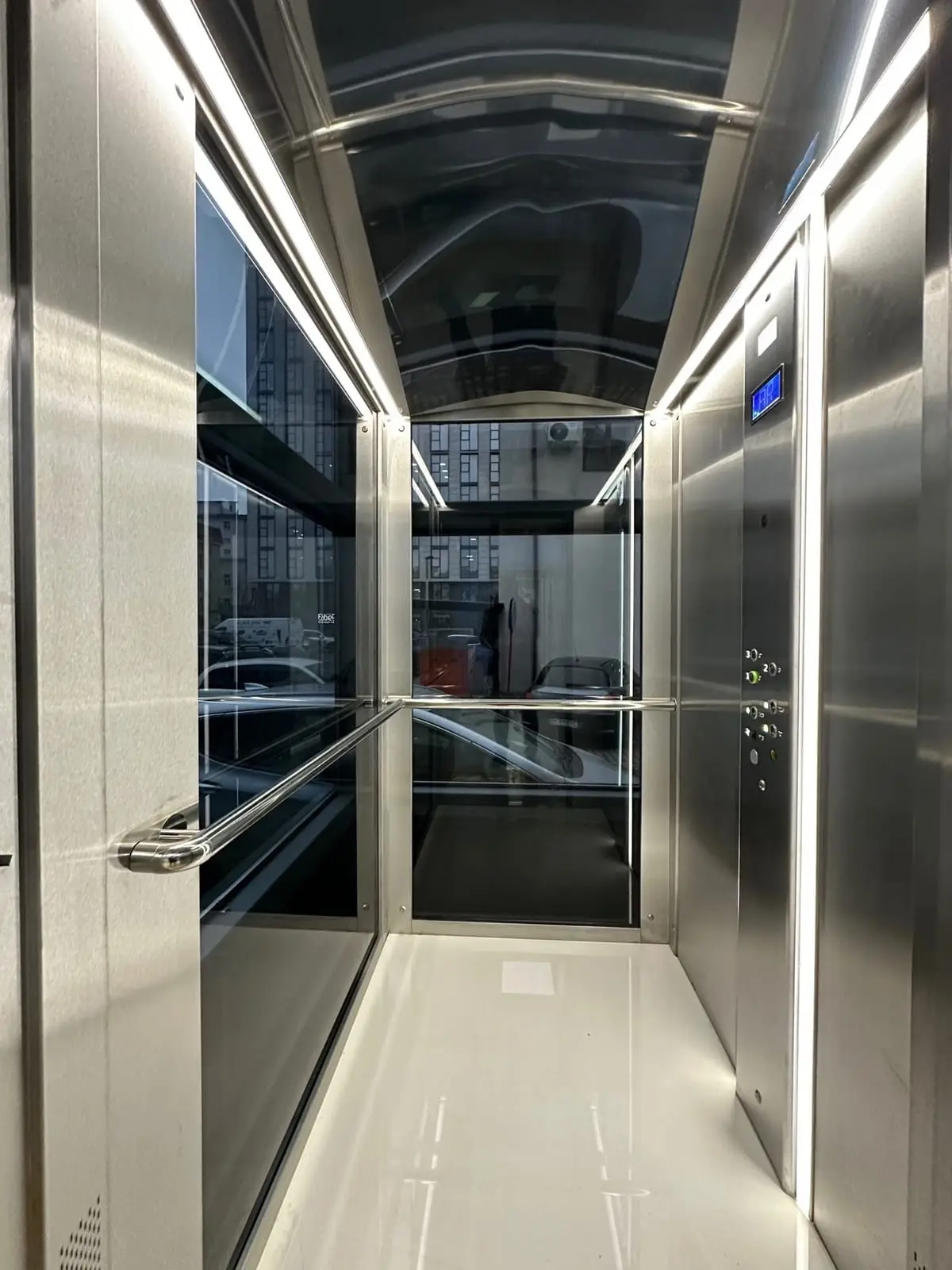
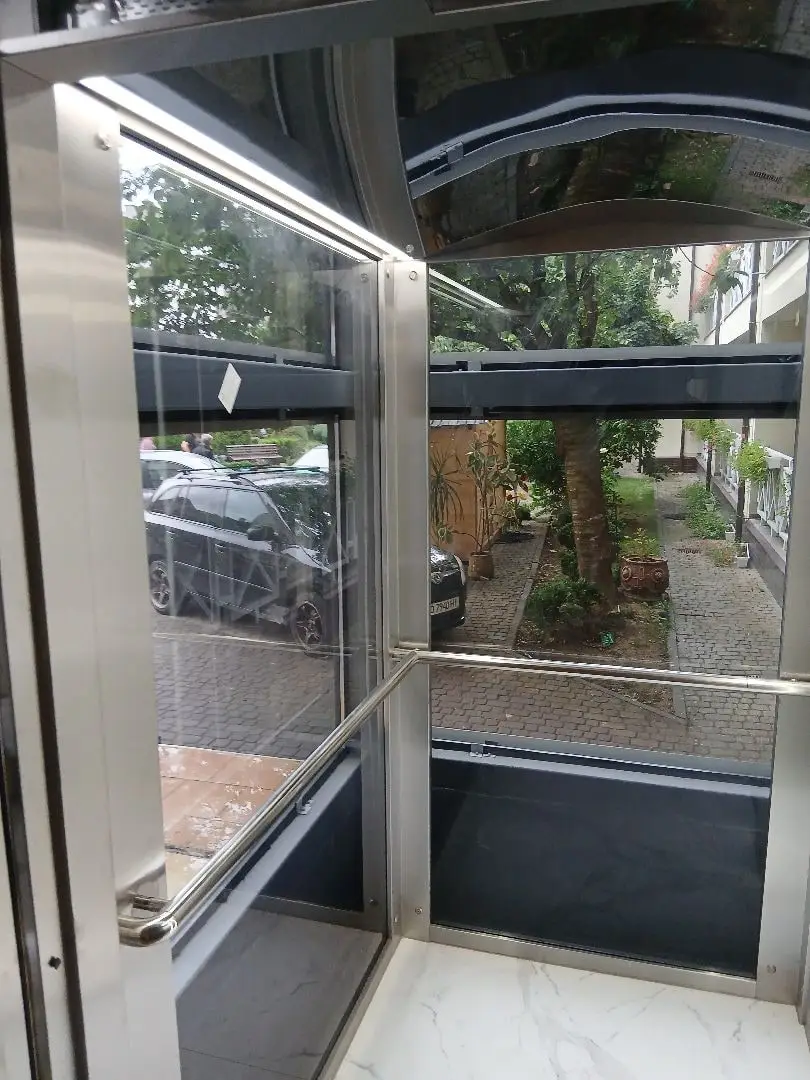
A glass car as an architectural feature of the building.
MRL - the equipment is housed inside the shaft.
Low travel, high rated load, quiet operation.
On schedule, there are monthly inspections, with an extended scope of work at the six-monthly and annual visits. Plus emergency call-outs on request, following the procedure and scope set out in the contract, where we also specify the response time. We tie the schedule to how the building operates: in a hospital or shopping centre some work is better done at night or at weekends, and we write this into the contract from the start.
Yes. A lift may not be operated without a contract with a specialized organization - this is a requirement of the safe operation rules, and every new building that forgot to budget for it trips over it. The contract is also needed to pass the technical inspection and keep the equipment passport in order.
Press the alarm button and wait. Neither passengers nor neighbours should try to open the doors themselves: the car may be stopped between floors, and an open landing door is an open drop. Only trained personnel carry out the rescue, with the power switched off and the car moved to the level of the landing.
Yes, this is standard practice. First comes a takeover inspection: we check the passport against the actual equipment and look at the condition of the components and any outstanding inspection orders. If the lift is in working order, we sign a contract. If there is anything that prevents it from being operated safely, we list it in a defect report before signing, not a month later.
Yes. Only a specialized organization is entitled to maintain lifts - this is a safety rule requirement, and without the relevant documents a maintenance contract simply cannot be signed. We provide permits, certificates and licences on request. We do not publish the full list on the website: there are many documents, they get updated, and an outdated number in the public domain is worse than none at all.
Full cycle: from shaft design to putting into operation.
Replacement of worn-out equipment without reconstructing the building.
Continuous communication with the car and equipment condition monitoring.
Escalators and moving walks for shopping malls, railway stations and metro systems.
What to do when a lift stops: how to act inside the car, why you must not open the doors, who is authorised to carry out a rescue, and what the homeowners' association (OSBB) can do to stop it happening again.
9 min readWhen replacing individual lift components is enough, and when a new lift is cheaper. Decision criteria, timelines and what happens to the shaft.
5 min readChoose what you need: an engineer will contact you within one working day, select a model and calculate the cost.
Or just give us a call: +38 (050) 585-39-28 ·+38 (063) 283-31-48 ·+38 (096) 901-76-50