GE XXI Lifts
Spanish vertical transportation company with its own in-house design department and a wide range of car designs.
Spanish vertical transportation company with its own in-house design department and a wide range of car designs.
GE XXI is based in Malaga, in southern Spain, and developed its own technical base at an Andalusian technology park. The company was formed from several businesses within one group that had previously operated separately. After the merger, the board deliberately narrowed its activity to a single industry - lifting equipment and everything that moves along horizontal, inclined or vertical guide rails.
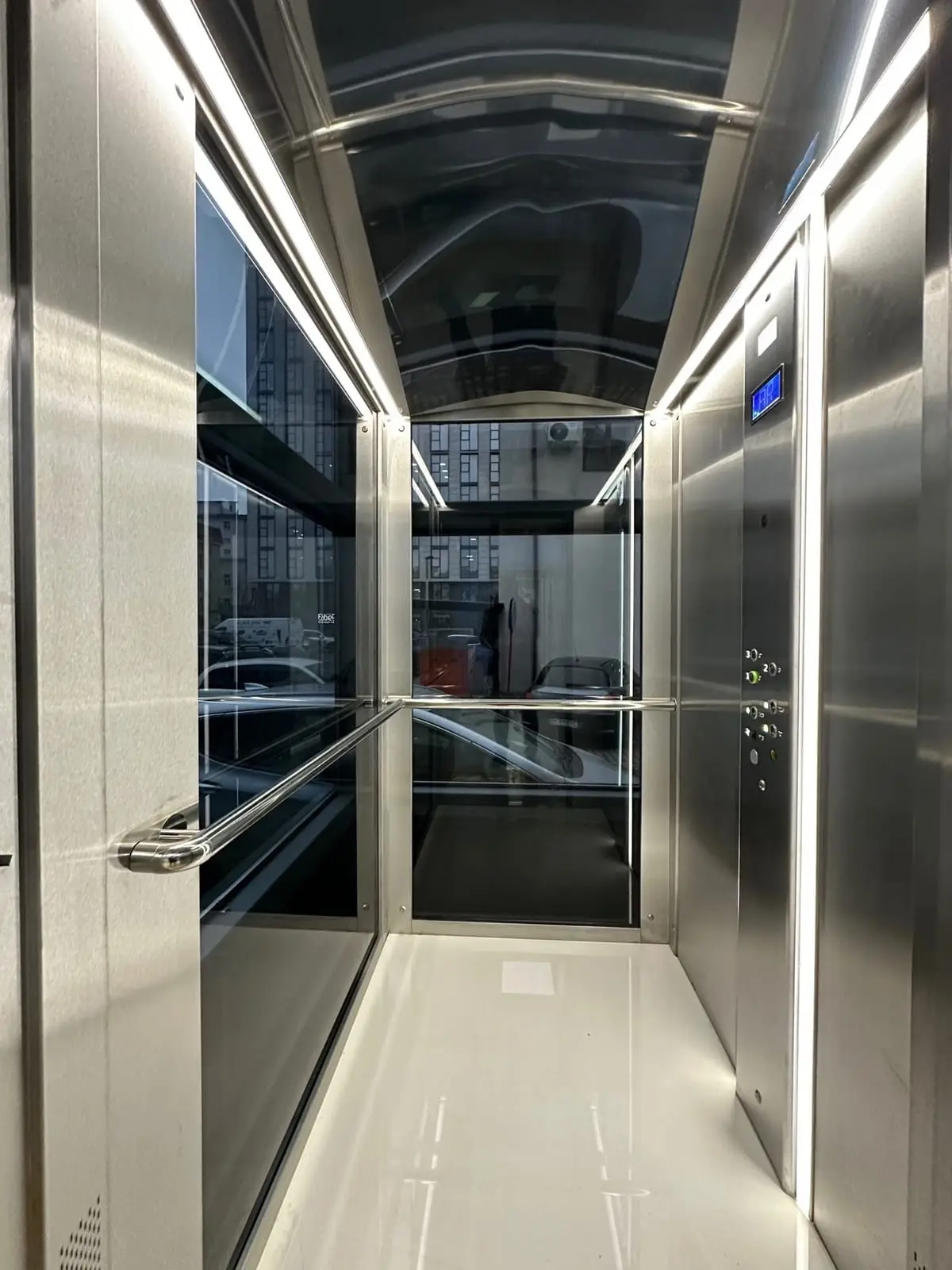
A practical feature for the client is the catalogue of ready-made car designs. This is not a matter of "pick a colour": every design is specified down to the last detail. One has modular plastic laminate walls, a perforated steel ceiling with white methacrylate, linoleum flooring, a mirror covering half of the rear wall, stainless steel skirting and the car operating panel on the side wall. Another uses the same base but with a black perforated ceiling and a rectangular handrail. The client sees a finished car, not a promise.
The ranges are divided by application: a standardized lift for apartment buildings, a home lift for private houses and cottages, and separate designs for non-standard tasks. The home version is exactly what you need when the lift has to be quiet, compact and free of a separate machine room. The company does not work only for its domestic market: it has an export division and representative offices outside Spain.
The weak point is the flip side of standardization. As long as you stay within the catalogue, everything comes together quickly and predictably; any departure from a standard size means a different price and different lead times. Logistics from southern Spain also take longer than from Bulgaria. For a shaft whose dimensions wander along its height, we more often propose a manufacturer that cuts the car to measured dimensions.
For residential buildings, offices, hotels and public buildings.
For warehouses, factories, shopping centres and kitchens.
For hospitals and medical centres: sized for stretchers and intensive care beds.
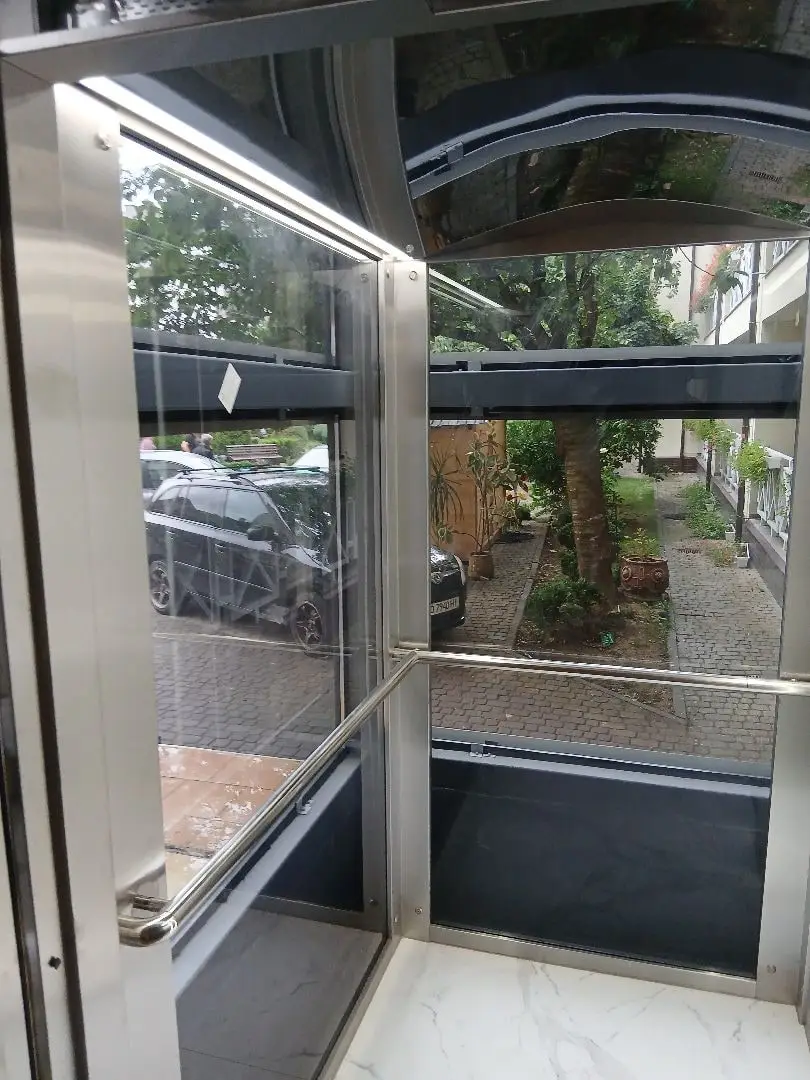
A glass car as an architectural feature of the building.
Mainly in its approach to specification. The company works with catalogue car designs and standard sizes, so a project comes together faster and at lower cost than when every lift is drawn from scratch. In return, you accept the limits of the catalogue. If the site needs non-standard dimensions or non-typical doors, that is a separate conversation about price and lead times.
Yes, the manufacturer has a separate range of home lifts. In practice, for a private house we compare two options: a conventional rope-traction lift in a masonry or metal shaft, or a platform lift that needs no shaft. The first is more comfortable and faster; the second costs less on the building side. The choice depends on whether the house is still being built or already standing.
Technically yes, but it rarely ends with the car alone. If the car frame, suspension and guide rails have reached the end of their service life, a new interior will only mask the problem. We first check the condition of the traction machine, controller and landing doors, and only then tell you whether it makes sense to limit the work to the car or whether it is wiser to replace the equipment entirely.
We give an exact lead time only once the specification is agreed - there is no point in inventing dates in advance. Three things affect it: whether you have chosen a standard design, the factory's workload and logistics from Spain. A standard configuration arrives sooner than a non-standard size. The agreed lead time is fixed in the contract, not in correspondence.
What determines the choice of lift: building type, number of floors, rated load, drive type and whether there is a machine room. Practical guidelines and common mistakes.
7 min readWhy the price is not quoted over the phone, which items actually make up the cost of a lift replacement, what drives the cost up and which benchmark you can check in the open register.
9 min readChoose what you need: an engineer will contact you within one working day, select a model and calculate the cost.
Or just give us a call: +38 (050) 585-39-28 ·+38 (063) 283-31-48 ·+38 (096) 901-76-50