Lifts by Cibes Lift
Swedish manufacturer of compact platform and screw-driven lifts. They are installed without a machine room or a deep pit, making them a solution for refurbishing existing buildings.
Swedish manufacturer of compact platform and screw-driven lifts. They are installed without a machine room or a deep pit, making them a solution for refurbishing existing buildings.
Sweden's Cibes has no ropes, no counterweight and no machine room. The platform travels along a screw shaft: a screw stands at the centre of the structure, and a driven nut moves the platform up or down. Hence its key feature: the structure is self-supporting. The shaft arrives as a ready-to-install kit and is assembled directly on the prepared floor, with no need to dig out a pit.
The power supply depends on the model. The mini platform for a private house can run on a single-phase 220-240 V supply via a variable frequency drive, with a motor rating of about 2.2 kW; there is also a three-phase 400 V version with a 16 A starting current. It is the single-phase option that makes Cibes convenient in an existing house: there is no need to run a separate power supply line. Installation takes less time than for a conventional lift in a shaft, and we give a specific schedule after visiting the site.
Now for what a screw-driven lift cannot do. It is slow: 0.15 m/s, or nine metres per minute. The mini model has a rated load of 300 kg, and travel is limited to four stops and roughly thirteen metres. The doors are single-leaf and open outwards by hand, and a gate may be fitted instead. For an apartment block entrance with a morning rush, it is not an option.
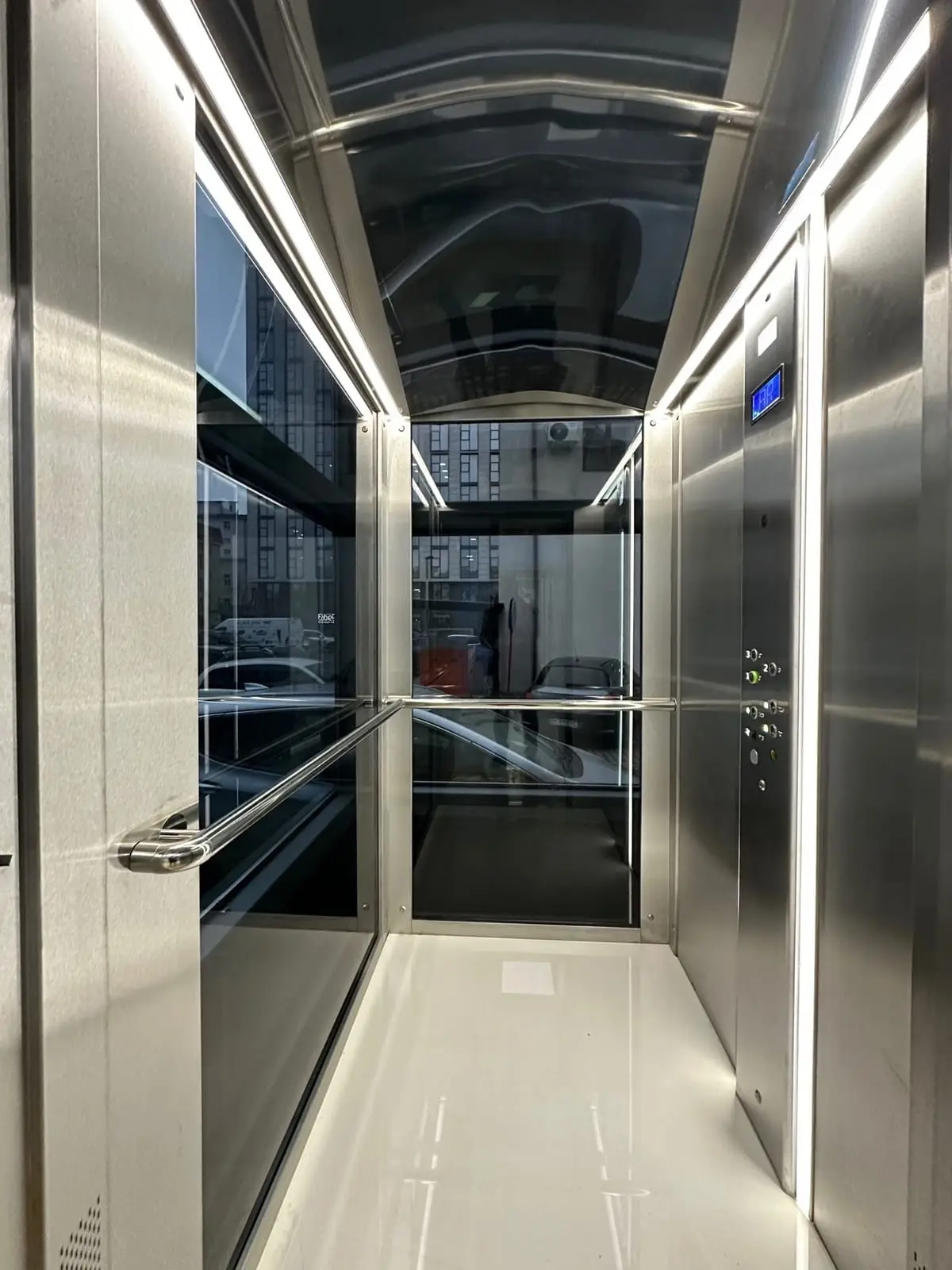
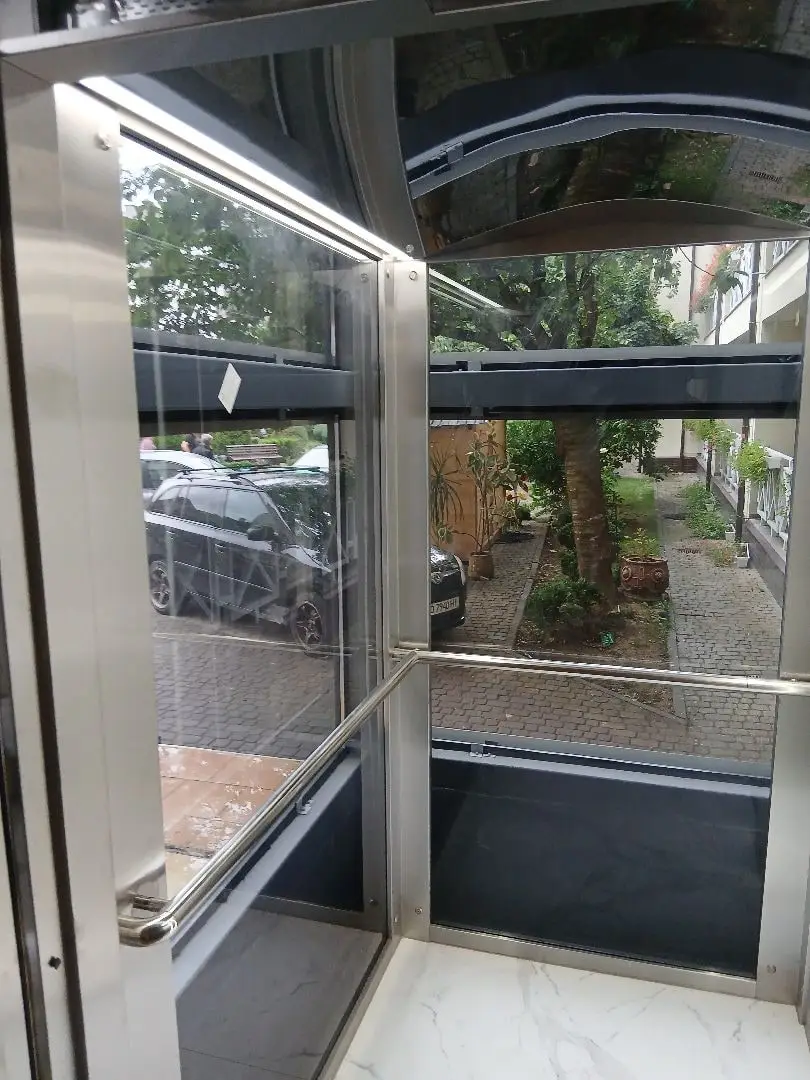
In western Ukraine, these platform lifts mostly go into refurbishment projects: old houses, institutions in historic districts, small clinics and offices where there is nowhere to cut in a conventional shaft but wheelchair access still has to be provided. The enclosure is either solid steel painted to a RAL colour or glazed; in residential interiors, glass is the more common choice.
For residential buildings, offices, hotels and public buildings.
For warehouses, factories, shopping centres and kitchens.
For hospitals and medical centres: sized for stretchers and intensive care beds.
A glass car as an architectural feature of the building.
No. There is no machine room at all: the drive is built into the structure itself. A pit is not essential either: the lift stands on a level, prepared floor, and access to the platform is provided by a low ramp, or by a shallow recess if the floor can be lowered after all. That is exactly why these platform lifts are installed in existing buildings.
About 0.15 m/s, or nine metres per minute. An ordinary passenger lift in a residential building travels roughly six times faster, so going up two floors here takes about forty seconds. For a private house or a doctor's surgery this does not matter. For an apartment block entrance where dozens of people leave at the same time every morning, it is critical.
Technically yes, but in practice it rarely makes sense. Capacity is low, passengers open the door leaf by hand and have to hold it, and intensive use wears out the screw-and-nut drive faster than domestic use. If the building has a shaft for a conventional lift, install a conventional lift. A screw-driven platform lift is the solution where there is no shaft and never will be.
The lift is subject to the same rules as other lifting equipment: putting into operation, registration with the technical supervision authorities, periodic inspections and planned maintenance. We help with registration and take the installation on for maintenance. The screw-and-nut drive needs regular cleaning and lubrication; this is the main scheduled task on this type of design.
A chair stair lift, a home lift with no pit, a PVE pneumatic lift, a Cibes screw-driven platform lift or a hydraulic lift: which of them will actually fit in your house.
9 min readWhat determines the choice of lift: building type, number of floors, rated load, drive type and whether there is a machine room. Practical guidelines and common mistakes.
7 min readChoose what you need: an engineer will contact you within one working day, select a model and calculate the cost.
Or just give us a call: +38 (050) 585-39-28 ·+38 (063) 283-31-48 ·+38 (096) 901-76-50