Hongda Lifts
Chinese manufacturer of lift equipment for residential and commercial buildings.
Chinese manufacturer of lift equipment for residential and commercial buildings.
Hongda was founded in 1993 and manufactures in Ningbo, a port city, which makes a real difference to logistics. From the outset the factory specialized in lifts and escalators: metal cutting, sheet metal processing, a painting line and testing equipment. A significant share of its output is exported to Europe, Asia, South America and Africa. Portal represents the brand in Ukraine, so we have seen the equipment in real life, not just in renderings.
The first thing you notice on a real lift is the doors. The metal is thicker than in the landing doors of many so-called European suppliers, and the hammer-finish paint is oven-cured. The door locks and mechanisms are simple and easy to repair - you appreciate this when you have to adjust doors by hand on site, without a factory test bench.
It is worth saying here what the industry knows but rarely says out loud: a considerable share of components for European lifts is made in China anyway, and not always to the best standard - price pressure affects everyone. The question is not the country on the nameplate but the level of assembly and quality control on a particular line.
There are downsides too. A hammer finish is not a "designer" finish, and touching up a panel on site is practically impossible: the tone and grain cannot be reproduced, so it is simpler to replace the whole door panel. Shipments come by sea, so orders are planned well in advance, not a week before the building is handed over. And the documents for registration have to be put in order here, by the supplier.
For residential buildings, offices, hotels and public buildings.
For warehouses, factories, shopping centres and kitchens.
For hospitals and medical centres: sized for stretchers and intensive care beds.
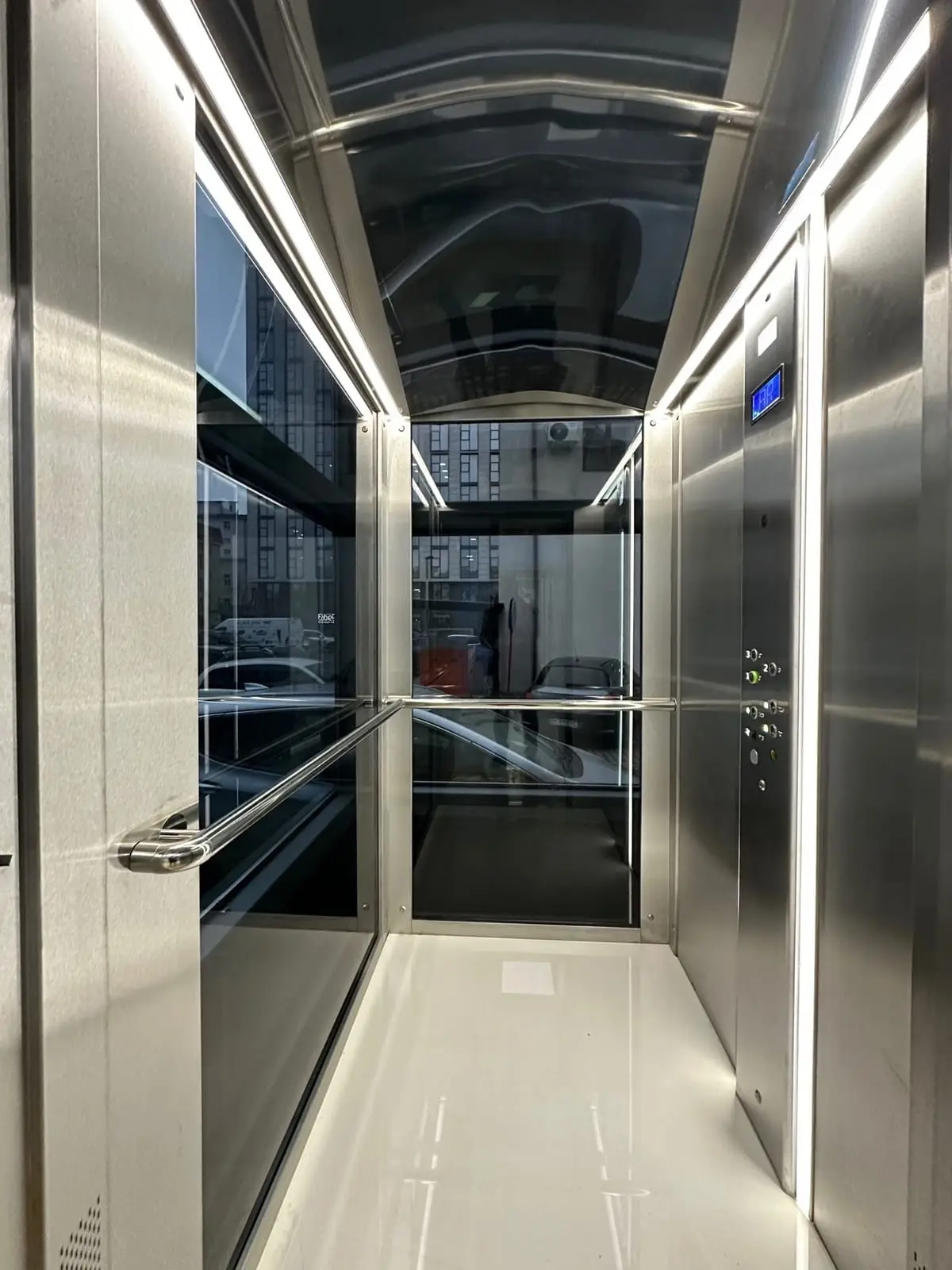
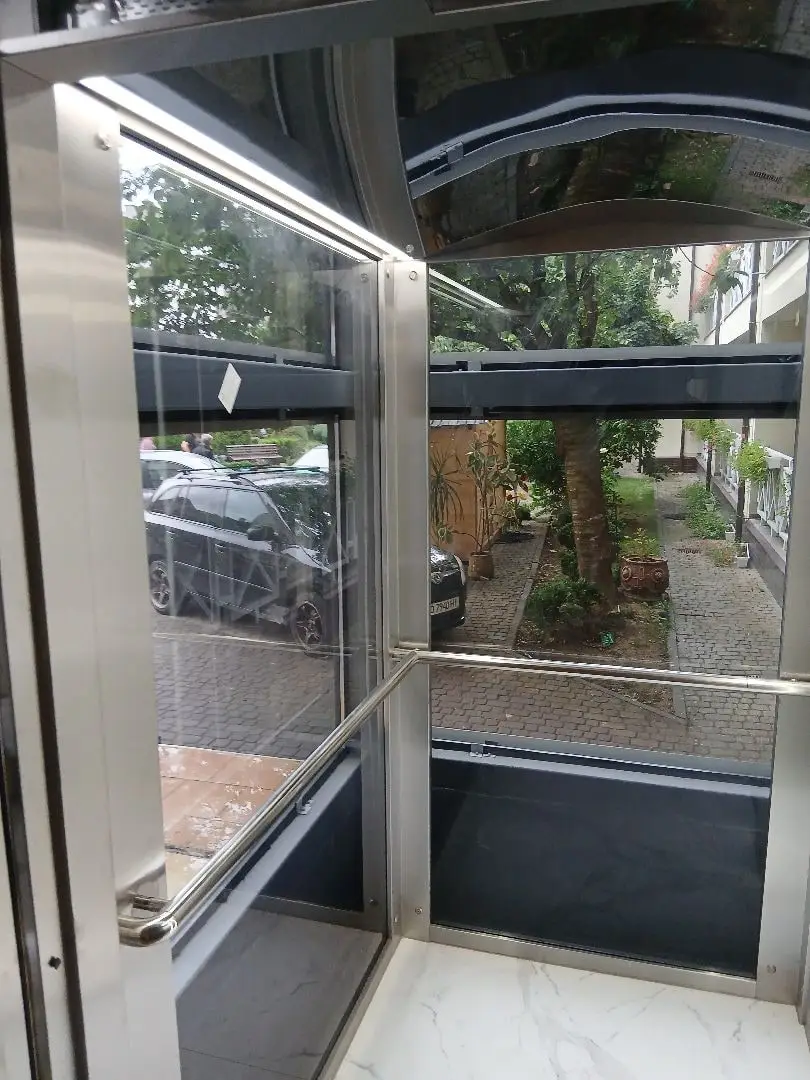
A glass car as an architectural feature of the building.
Better than most of what we have seen in this price range. The paint is oven-cured, so a scratch does not take the coating down to bare metal, and the hammer-finish texture hides minor marks. It is not armour: a door panel can be bent by a blow. But it reliably resists keys, coins and graffiti.
Because in the cheapest European series the components are often of the same origin, just with a brand mark-up. If the budget will not stretch to a proper European lift anyway, it is more honest to choose a Chinese lift with sturdy doors. When the budget allows, we recommend Bulgarian or Turkish factories, and we say so plainly.
The cheapest approach is to include common wear parts in the original order. After that, some parts can be sourced from what is available on the market. Painted door panels and decorative parts are harder: an exact match in colour and texture takes a long time to find, so a damaged panel is usually replaced entirely rather than adapted on site.
The range does include hospital versions, but for a medical facility we look past the catalogue at specifics: stopping accuracy, drive behaviour under frequent starts, and door width for a stretcher trolley with attendants. If the facility is critical, we tell the client plainly that a European factory is the better fit here.
What determines the choice of lift: building type, number of floors, rated load, drive type and whether there is a machine room. Practical guidelines and common mistakes.
7 min readWhy the price is not quoted over the phone, which items actually make up the cost of a lift replacement, what drives the cost up and which benchmark you can check in the open register.
9 min readChoose what you need: an engineer will contact you within one working day, select a model and calculate the cost.
Or just give us a call: +38 (050) 585-39-28 ·+38 (063) 283-31-48 ·+38 (096) 901-76-50