TK Elevator Lifts
Formerly ThyssenKrupp Elevator - a German group, the world's third-largest manufacturer of lift and escalator equipment by output.
Formerly ThyssenKrupp Elevator - a German group, the world's third-largest manufacturer of lift and escalator equipment by output.
TK Elevator is the former lift division of ThyssenKrupp: after the sale it became a separate company and changed its name. The factories, design documentation and engineering tradition remained German. What matters more to the client is that it is the world's third-largest manufacturer of lift and escalator equipment, with hundreds of subsidiaries and offices in dozens of countries - in other words, a service network that will not disappear a year after the project is handed over.
Its best-known development is TWIN: two cars, one above the other, in a shared shaft, each with its own traction machine, ropes and counterweight, moving independently. The safety system ensures that a safe distance is always kept between them. In a high-rise building this frees up floor space that additional shafts would otherwise take. But the concept only makes sense above a certain building height and traffic level - in an ordinary building it will only complicate servicing.
The rest of the range is more prosaic and, in practice, needed more often: passenger and panoramic lifts, goods lifts and car lifts, and home lifts with traction or hydraulic drive. For a private house of two or three floors, hydraulics still win: lower headroom requirements, a quieter ride and simpler installation - although they use noticeably more electricity on the way up.
Escalators and passenger conveyors are a strong part of the group's business, designed for metro and railway stations. A two-speed mode, in which an escalator with no passengers switches to reduced speed on a sensor signal, cuts both the electricity bill and wear on the step chain at sites with uneven traffic. Exactly how much depends on the operating schedule of the particular site; there is no universal figure.
For residential buildings, offices, hotels and public buildings.
For warehouses, factories, shopping centres and kitchens.
For hospitals and medical centres: sized for stretchers and intensive care beds.
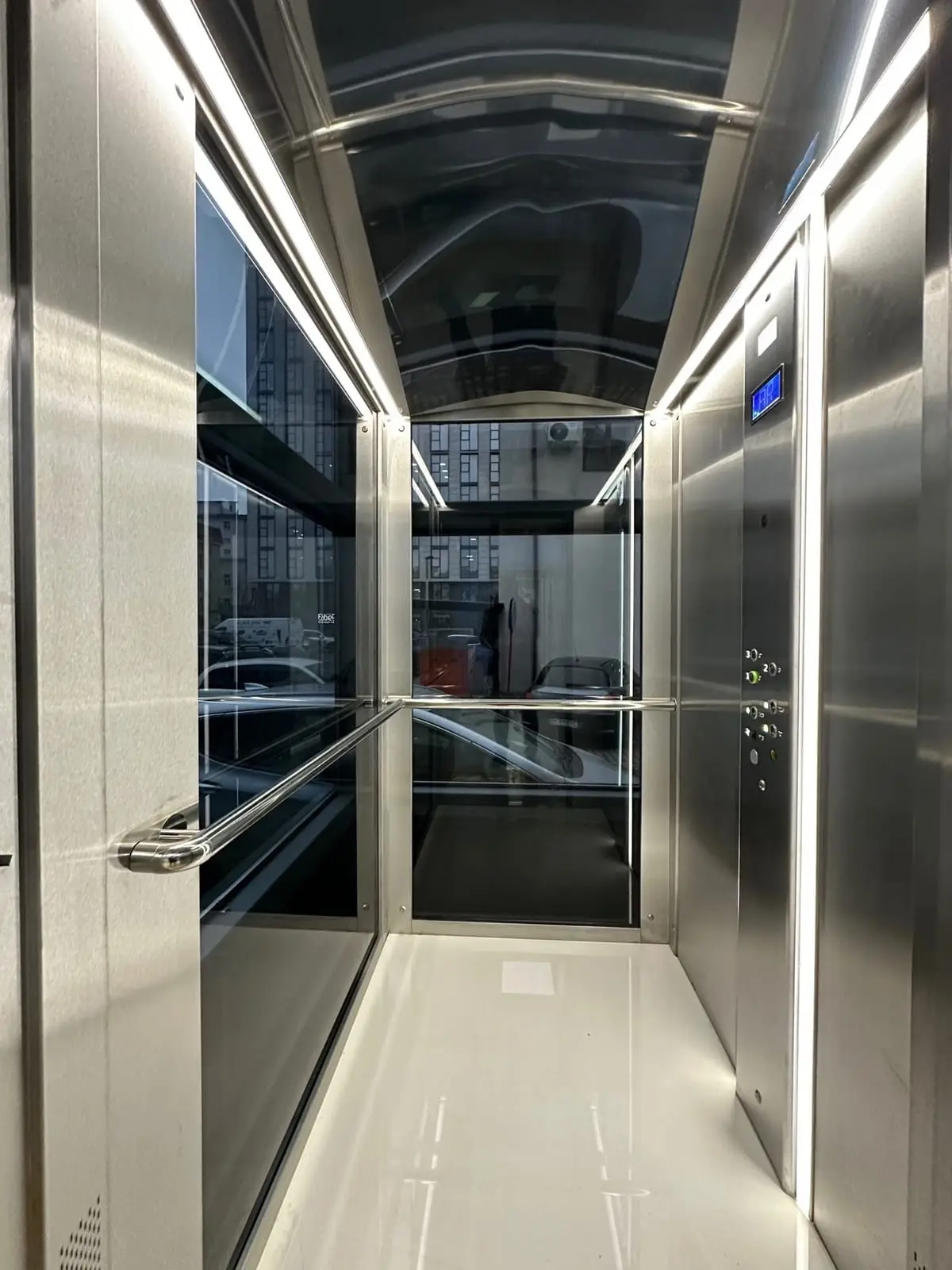
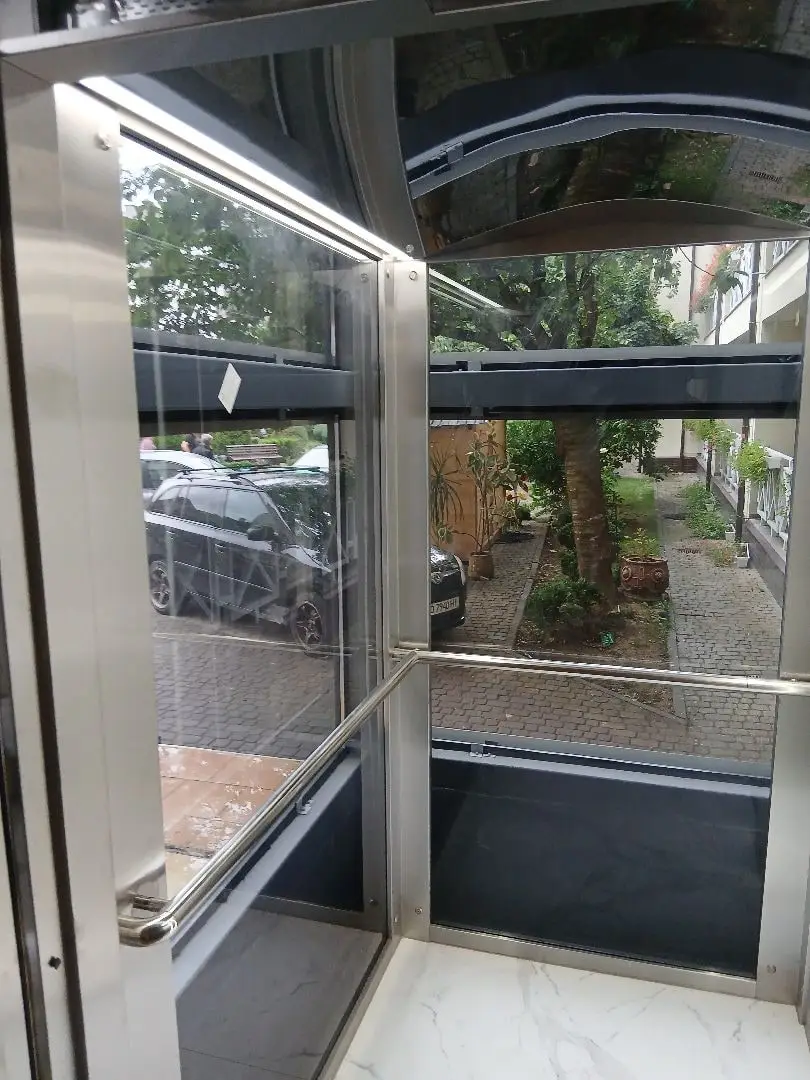
A glass car as an architectural feature of the building.
It is the same lift business, separated from the ThyssenKrupp group and renamed. The factories, design documentation and service network stayed the same, so equipment with the old nameplate continues to be serviced and supplied with spare parts. The plate in your shaft may show either name - they are not two different manufacturers.
Only if it is genuinely a high-rise building with heavy traffic and a shortage of floor space for shafts. Two cars in one shaft mean a more complex safety system, more expensive maintenance and higher demands on the technician's qualifications. For a building of ten to fifteen floors, a conventional group of two lifts is cheaper and more reliable.
For two or three floors, hydraulics usually win: less headroom needed at the top of the shaft, simpler installation and a smooth ride, and the pump unit can be placed in a nearby utility room. The drawbacks are higher power consumption on the way up and the need to monitor oil level and temperature. Above three floors, or with frequent trips, a traction (rope) drive makes more sense.
This is heavy-duty operation: round-the-clock running, dust, road salt in winter, and direction reversal to match passenger flows. Equipment for such conditions is ordered in a heavy-duty version with a suitable chain and steps. We take on the installation and maintenance of escalators and moving walks, but at transport facilities we agree the schedule in advance, as maintenance windows there are short.
Often, yes. The most common option is to replace the controller and door operator while keeping the traction machine, guide rails and landing doors. This brings a new level of safety and comfort for less than a full replacement. We decide after a condition survey: if the guide rails or car frame are worn, partial modernization makes no sense.
What determines the choice of lift: building type, number of floors, rated load, drive type and whether there is a machine room. Practical guidelines and common mistakes.
7 min readWhy the price is not quoted over the phone, which items actually make up the cost of a lift replacement, what drives the cost up and which benchmark you can check in the open register.
9 min readChoose what you need: an engineer will contact you within one working day, select a model and calculate the cost.
Or just give us a call: +38 (050) 585-39-28 ·+38 (063) 283-31-48 ·+38 (096) 901-76-50