Schindler Lifts
A Swiss manufacturer of lifts and escalators with a history of more than 150 years. One of the global leaders by size of service portfolio.
A Swiss manufacturer of lifts and escalators with a history of more than 150 years. One of the global leaders by size of service portfolio.
Schindler was founded in Switzerland in 1874. Since the 1980s the company has ranked first in the world for escalators and second for lifts, behind only Otis. The Swiss approach shows in the details: how the doors sit, the tolerances on the door portal frames, consistent assembly from one project to the next. Installers notice it immediately - less on-site fitting, fewer surprises during commissioning.
Schindler's best-known feature is destination control. Passengers enter their floor in the lobby, before they reach the car, and the panel shows which lift will pick them up. The system groups people heading the same way into one car, the number of stops falls, and the building may need fewer shafts. There are simply no floor buttons inside the car.
Schindler ID grew out of the same logic: the lift recognizes the passenger by a card or PIN code and allows access only to authorized floors. In a mixed-use building with offices, apartments and parking under one roof, this is usually simpler and cheaper than installing separate lift groups for each function, and it takes some of the load off security at the lobby entrances.
Brochures don't mention it, but destination control takes some getting used to. In a hotel or hospital, where half the passengers are in the building for the first time, it causes more confusion than benefit and needs clear wayfinding in the lobby; otherwise, at peak times people will simply get stuck at the panel. For a nine-storey residential block it is entirely unnecessary: conventional collective control works fine there.
For residential buildings, offices, hotels and public buildings.
For warehouses, factories, shopping centres and kitchens.
For hospitals and medical centres: sized for stretchers and intensive care beds.
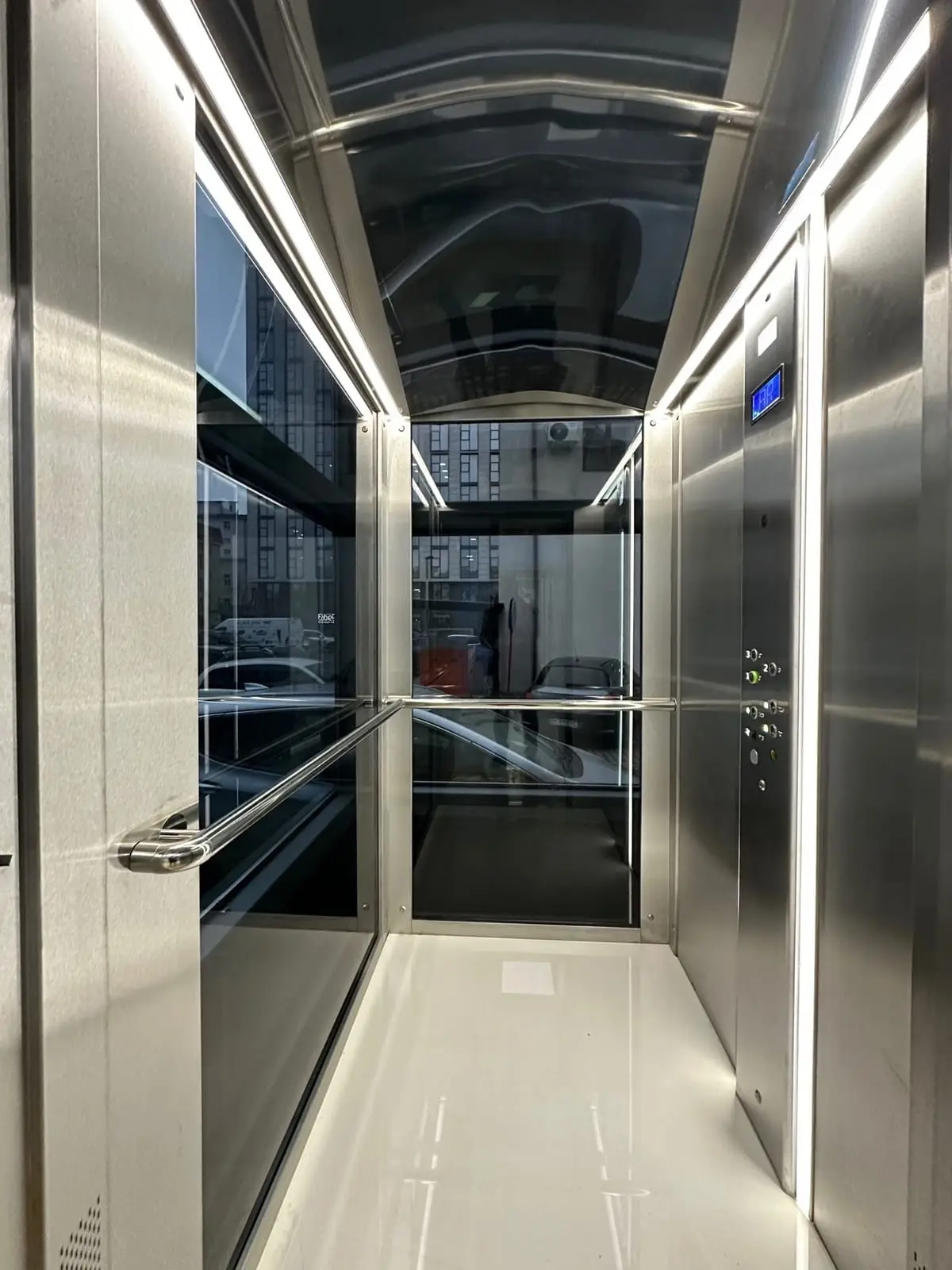
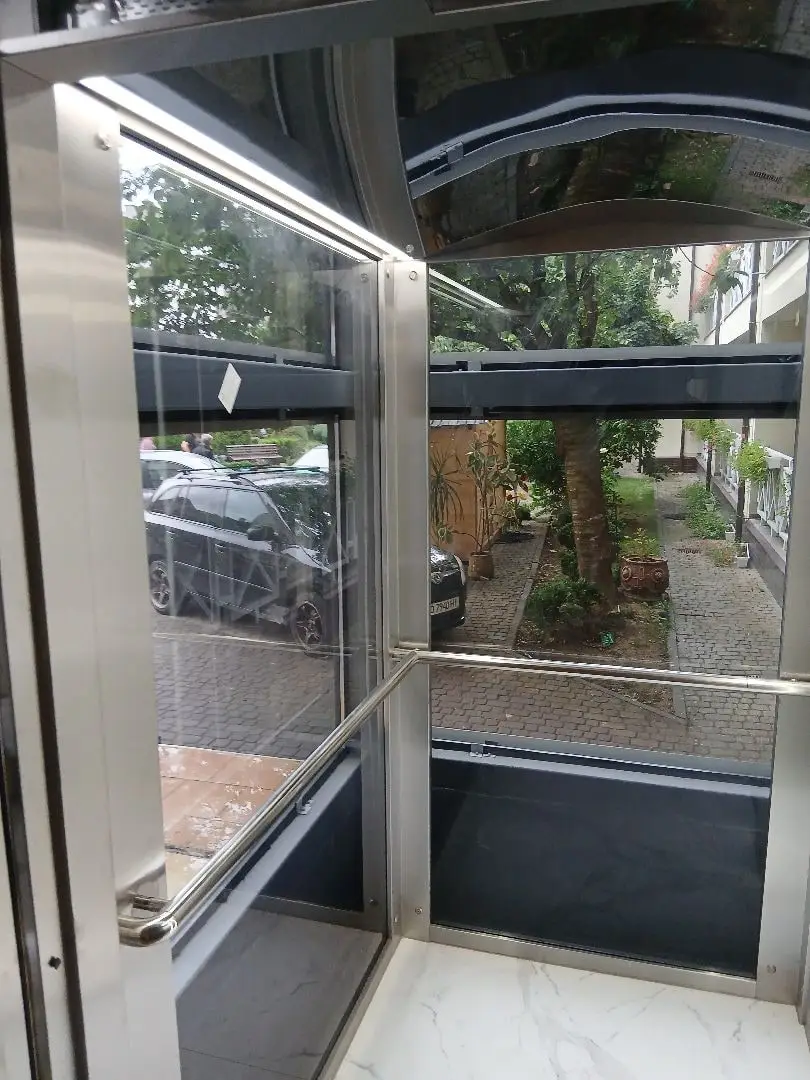
A glass car as an architectural feature of the building.
If you have an office building with a group of three or more lifts and a pronounced morning peak, yes: it pays for itself because it lets you get by with fewer shafts. If it is housing, a hotel or a hospital with many occasional passengers, no. There people have to be taught how to use the system, and at peak times they will simply get stuck in the lobby.
An escalator needs far more attention than a lift: regular inspection, checking the tension and lubrication of the step chain, and the condition of the comb plates, handrail and safety switches. We maintain escalators and moving walks and travel to sites across the country. Planned maintenance here costs an order of magnitude less than repairs, and a stopped escalator in a shopping centre also means lost footfall.
European standard sizes do not always match what was built to Soviet-era standard designs. Some models fit an old shaft without alterations, while others need changes to the headroom or a deeper pit. This is a matter for an on-site survey, not the catalogue. We measure the shaft and tell you straight away whether this option is worth pursuing.
The mechanical part - guide rails, car frame, landing doors - lasts for decades with proper maintenance. The electronics age first: the controller and drives become obsolete before they physically wear out, and a spare part for a discontinued circuit board is harder to find than one for a traction machine. Plan to replace the electrical equipment earlier than the mechanical parts.
What determines the choice of lift: building type, number of floors, rated load, drive type and whether there is a machine room. Practical guidelines and common mistakes.
7 min readWhy the price is not quoted over the phone, which items actually make up the cost of a lift replacement, what drives the cost up and which benchmark you can check in the open register.
9 min readChoose what you need: an engineer will contact you within one working day, select a model and calculate the cost.
Or just give us a call: +38 (050) 585-39-28 ·+38 (063) 283-31-48 ·+38 (096) 901-76-50