Knowledge base

Lift car design and finishes

What lift cars are made of, which finish options are available and how to choose materials for the building type and intensity of use.

  • 5min read

Updated

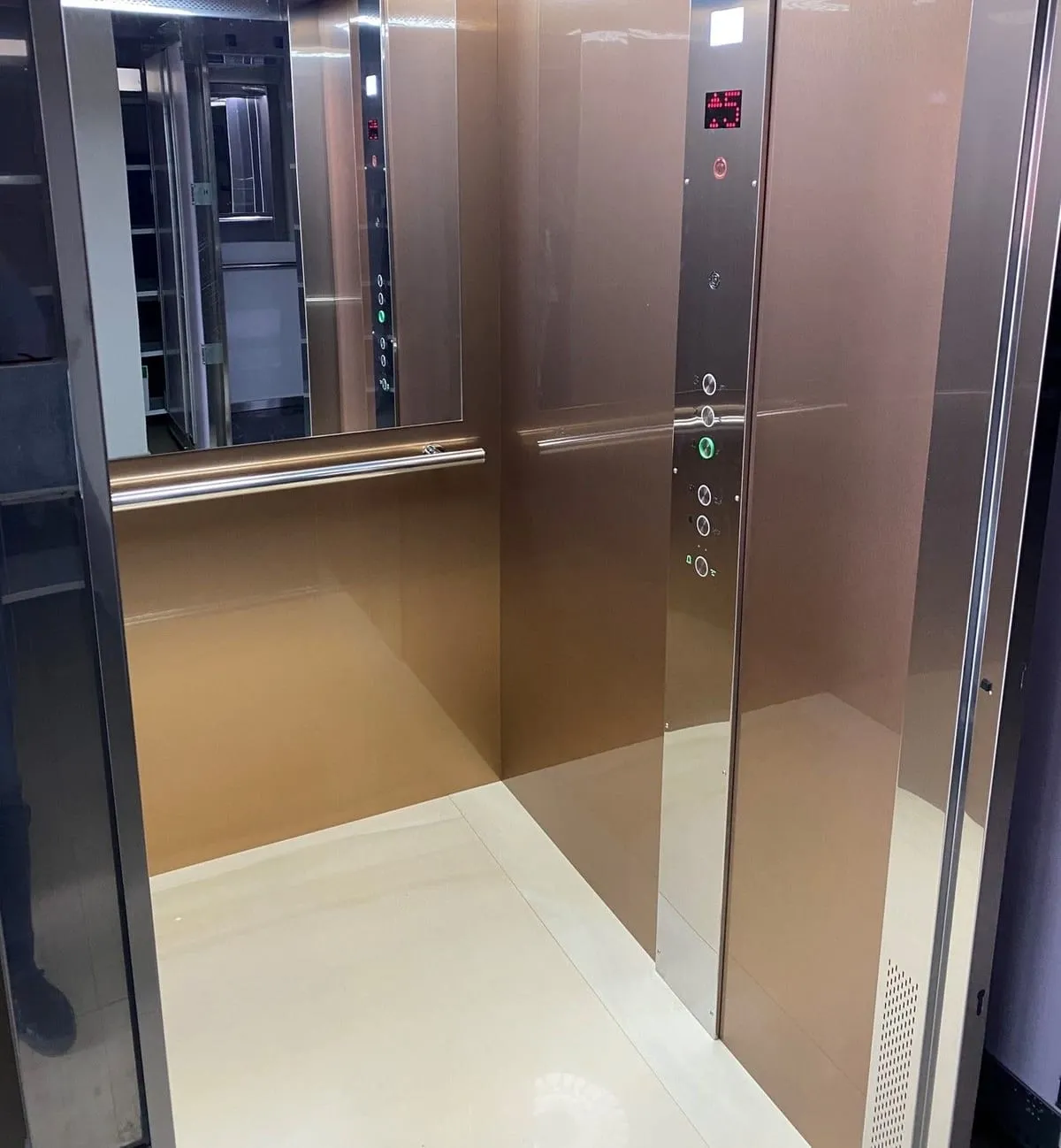
Lift car with a bronze-tone mirror finish and light-coloured flooring

Along with technical specifications, expectations for car comfort and appearance rise every year. Finishes are chosen individually for each project: what looks good in a business centre quickly loses its looks in the entrance hall of a residential block.

Wall materials

MaterialBest suited for
Brushed stainless steelResidential buildings, hospitals, high-traffic sites - the most resistant to scratches and vandalism
Mirror-polished stainless steelHotels, business centres - makes the car look larger, but fingerprints show
Coloured stainless steel (bronze, gold, graphite)Prestige buildings where the lift has to complement the interior
Laminated MDF panelsOffices and business-class housing - a wide choice of colours, lower cost
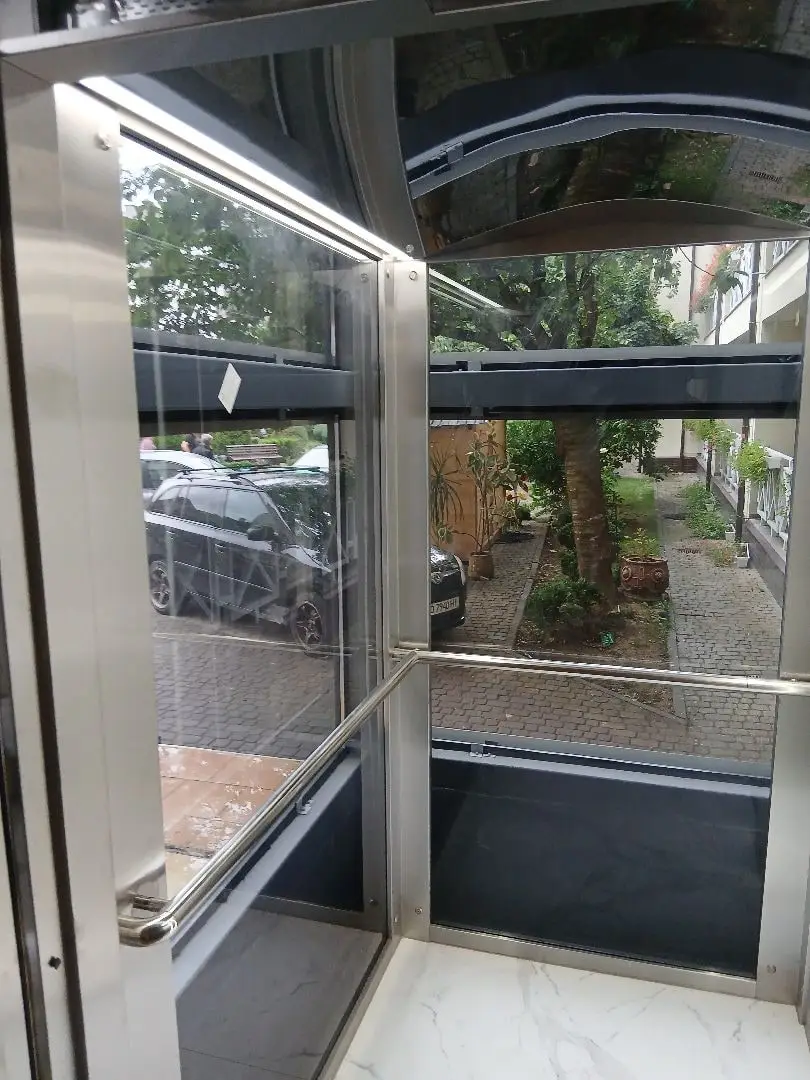
Toughened glassPanoramic cars and atriums
Natural wood, artificial stonePrivate houses, premium projects

Flooring

  • Porcelain stoneware or natural stone - the most durable, but they add weight to the car.
  • Vandal-resistant PVC flooring - practical for residential buildings and easy to replace.
  • Chequer-plate stainless steel - for goods lifts and dumbwaiters.

Lighting

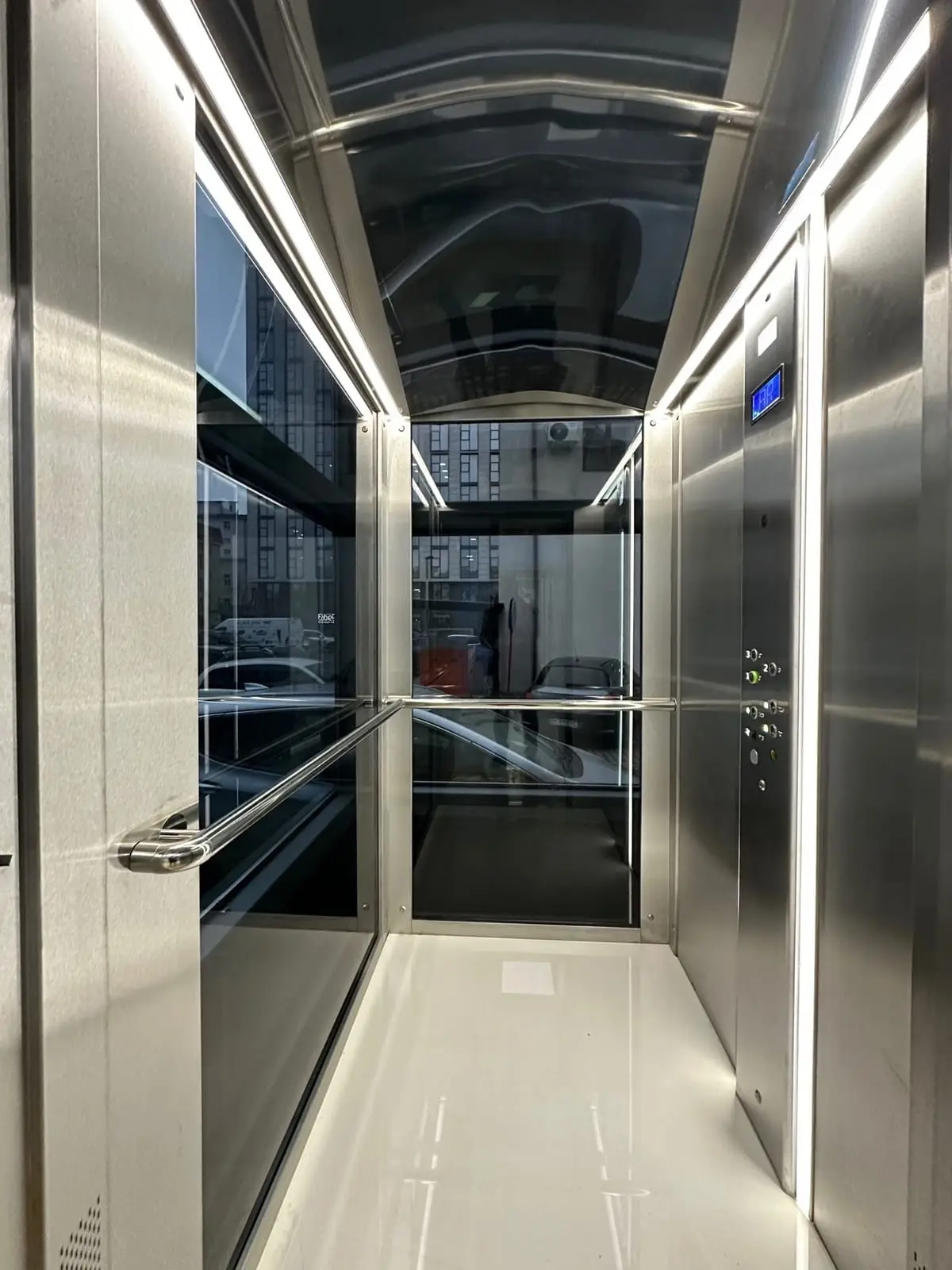
LED lighting is now the standard: it uses less energy and does not need frequent lamp replacement. Perimeter lighting around the ceiling or along the walls makes the car look larger - a technique that works well in narrow 400-630 kg cars.

Doors and car operating panel

  • Automatic sliding doors - the standard for passenger lifts.
  • A full-height car operating panel looks more modern than a compact one, but costs more.
  • Buttons with tactile markings and Braille are required in buildings with accessibility requirements.
  • A display showing the floor and direction of travel - in the car and on the landings.

How to choose

A practical rule: the heavier the traffic and the less supervision the car gets, the simpler and tougher the finishes should be. In the entrance hall of a residential block, brushed stainless steel with PVC flooring will last longer and cost less to maintain than mirror panels that show every touch.

Quick answers

Related questions

Which car finish is the most practical for a residential building?

Brushed stainless steel on the walls and vandal-resistant PVC flooring. This combination resists scratches and graffiti, is easy to clean, and a damaged section of flooring can be replaced on its own without dismantling the car.

Can the car finishes be updated without replacing the lift?

Yes. Replacing the wall panels, floor, lighting and car operating panel is done separately from the mechanical equipment - it is part of modernization. If the traction machine, guide rails and controller are in good condition, refreshing the look of the car costs far less than a new lift.

Read next

Metron lifts from Greece: the series available and who they suit

Metron from Serres: machine-room-less lifts, series with a pit from 550 mm for older buildings, hydraulic lifts, home lifts and steel shafts. What to know before ordering.

Canny escalators: who the manufacturer is and where they are already in service

Canny Elevator escalators and moving walks for shopping centres, railway stations and metros. How many are produced, which projects the manufacturer showcases and how we choose a model for a building.

MP Mobi home lift: a hydraulic platform lift with car doors

MP Mobi is a vertical platform lift from Spanish manufacturer MP that works like a regular lift (elevator): car doors, one-touch call, pit from 200 mm, up to 1000 kg, battery-powered rescue. Who it suits and where its limits lie.

MP lifts from Spain: who the manufacturer is and why we recommend it

MP lifts from Seville: in-house electronics and traction machines, an open (non-proprietary) controller, EU certificates, two factories. What we check in a manufacturer before offering it to clients, and what ordering an MP lift with installation and service from Portal looks like.

An external lift for a listed heritage building: the Chernivtsi example

The Chernivtsi Regional State Administration building is a monument of national significance. How we added a glass shaft on its own foundation to the courtyard façade, turned windows into doorways and installed an Izamet panoramic lift without a single new opening through the historic wall.

A lift for a private house: the options and what the building decides

A chair stair lift, a home lift with no pit, a PVE pneumatic lift, a Cibes screw-driven platform lift or a hydraulic lift: which of them will actually fit in your house.

The lift has stopped: what passengers, neighbours and the homeowners' association chair should do

What to do when a lift stops: how to act inside the car, why you must not open the doors, who is authorised to carry out a rescue, and what the homeowners' association (OSBB) can do to stop it happening again.

Lift options: what to order up front and what can be added later

A walk through a lift quotation: which options must be planned before installation, which can be added later without rework, and which are worth skipping.

How to choose a lift: a step-by-step guide for clients

What determines the choice of lift: building type, number of floors, rated load, drive type and whether there is a machine room. Practical guidelines and common mistakes.

Lift modernization or full replacement: which to choose

When replacing individual lift components is enough, and when a new lift is cheaper. Decision criteria, timelines and what happens to the shaft.

Lift shaft: dimensions, pit and headroom

Lift shaft plan dimensions, a 1200-1400 mm pit and 3600-4000 mm headroom for a 1.0 m/s lift, and when 50-150 mm is enough. What to measure before pricing.

Glossary of lift terms

What pit, headroom, safety gear, counterweight, group control and other terms found in lift equipment designs and contracts mean.

How much lift replacement costs and what makes up the price

Why the price is not quoted over the phone, which items actually make up the cost of a lift replacement, what drives the cost up and which benchmark you can check in the open register.

We'll price your equipment free of charge

Choose what you need: an engineer will contact you within one working day, select a model and calculate the cost.

Or leave your number and we'll call you back

We'll call you within one working day. The site survey and pricing are free of charge.

Or just give us a call: +38 (050) 585-39-28 ·+38 (063) 283-31-48 ·+38 (096) 901-76-50