Knowledge base

Canny escalators: who the manufacturer is and where they are already in service

Canny Elevator escalators and moving walks for shopping centres, railway stations and metros. How many are produced, which projects the manufacturer showcases and how we choose a model for a building.

  • 5min read

Updated

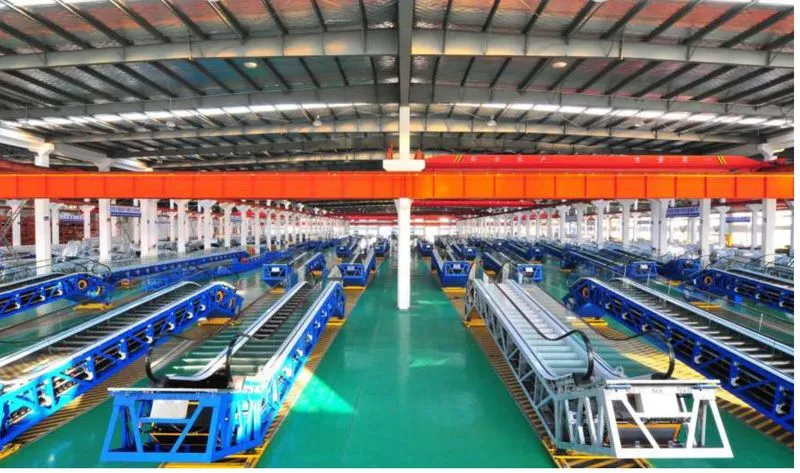
Escalator and moving walk workshop at the Canny factory

An escalator is chosen differently from a lift. A lift sits in its shaft and rarely catches the eye, while an escalator carries thousands of people every day in the middle of a sales floor, and everyone sees when it stops. So the first question is not "which one is cheaper" but "how many people must it handle, and for how many hours a day".

Who Canny are

Canny Elevator was founded in 1997 in Suzhou and has been listed on the Shenzhen Stock Exchange since 2010. Yes, it is a Chinese manufacturer, and we do not hide it. But it is no small workshop either: in 2025 the company produced 3,228 escalators, with a workforce of about 4,700. Its reporting is public, so these figures can be checked.

Projects the manufacturer showcases

The most telling are the transport projects, because that is where an escalator works under the toughest conditions.

  • Suzhou Metro: over a thousand heavy-duty KLXF series escalators across lines 1, 2 and 4.
  • New Delhi Metro: 291 heavy-duty public transport escalators.
  • A railway station in India: 68 public transport escalators.
  • Metro stations in Turkey: 76 escalators.
  • Tianmen Mountain, China: 19 panoramic public transport escalators in a tunnel, 16 of them with a 30 m rise. For this project the company took first place in the "Escalators, New Installation" category of the Elevator World Project of the Year awards (2015).
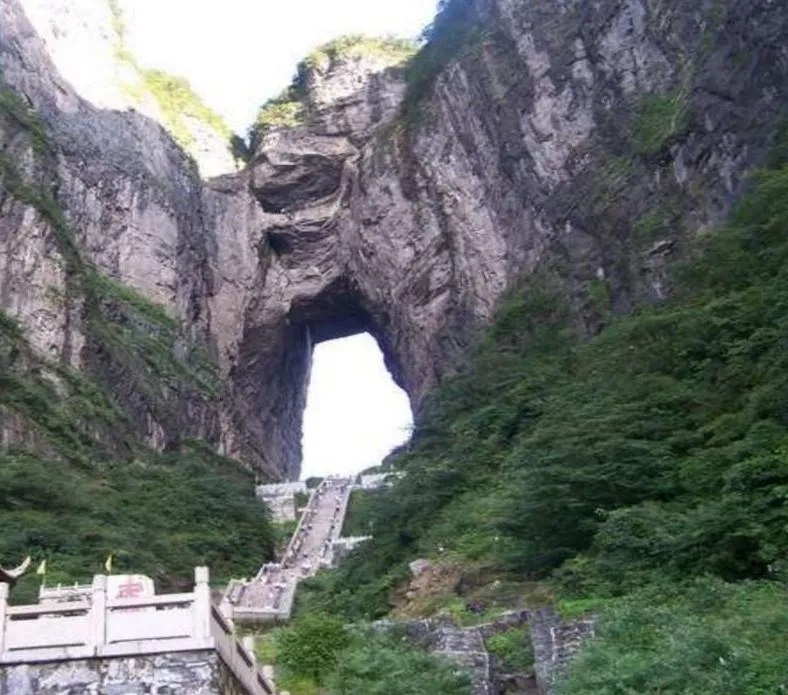
Tianmen Mountain in China, where Canny escalators run inside a tunnel
Tianmen Mountain: 19 panoramic escalators in a tunnel

Data on these projects comes from the manufacturer's 2016 presentation. According to its 2023 presentation, the highest rise among its escalators is 50.4 m. You are unlikely to need one like that, but it shows well what its engineers are capable of.
Elevated section of the Suzhou Metro, whose lines use Canny escalators
Suzhou Metro: Canny supplied heavy-duty public transport escalators here

How to choose a model

  • Shopping or business centre: the commercial series is usually enough, with an 800 or 1000 mm step.
  • Railway station, metro, major transport hub: a heavy-duty series for intensive daily operation.
  • Outdoor installation: protection against moisture and frost is discussed separately.
  • Rise: up to 6 m, a 35-degree incline can be used at speeds up to 0.5 m/s, and it takes up less space. Above that, 30 degrees is used.

Before pricing, we need the floor-to-floor height, the size of the floor opening and the expected passenger flow. If the building is still at the design stage, it is best to show us the drawings before the floor slab is poured.

Documents

If an escalator is manufactured to DSTU EN 115-1:2019 (EN 115-1), it comes with a declaration of conformity from the manufacturer or its authorised representative, and no separate certificate from a conformity assessment body is needed. After installation, a technical inspection is carried out and the owner obtains the right to operate it, as it is high-risk equipment. We show you the list of documents for the specific escalator before the contract is signed.

What we do

We work under the LIFTPORTAL brand: we survey the building, select the model, price the supply, install, commission and then maintain the equipment. The site survey and pricing are free of charge.

Our own experience is shown by the Mens shopping centre in Ivano-Frankivsk, where our team installed six escalators. The escalators on that project are made by Izamet.
The factory, projects and workshops are shown in the Canny - LIFTPORTAL brochure (PDF, 3.4 MB). General specifications of escalators and moving walks are on a separate page, and you can send an enquiry here.
Quick answers

Related questions

Is escalator production a major business for Canny?

Yes: in 2025 the company produced 3,228 escalators, and its projects include metro lines in China and India.

How does a public transport escalator differ from a commercial one?

A public transport escalator is designed for intensive daily operation under heavy passenger flow: it is a reinforced, heavy-duty design intended for metros, railway stations and airports. For most shopping centres, the commercial series is enough.

How much does an escalator cost?

We do not publish prices on the website: the cost depends on the rise, step width, series and installation location. The site survey and pricing are free of charge.

Read next

Metron lifts from Greece: the series available and who they suit

Metron from Serres: machine-room-less lifts, series with a pit from 550 mm for older buildings, hydraulic lifts, home lifts and steel shafts. What to know before ordering.

MP Mobi home lift: a hydraulic platform lift with car doors

MP Mobi is a vertical platform lift from Spanish manufacturer MP that works like a regular lift (elevator): car doors, one-touch call, pit from 200 mm, up to 1000 kg, battery-powered rescue. Who it suits and where its limits lie.

MP lifts from Spain: who the manufacturer is and why we recommend it

MP lifts from Seville: in-house electronics and traction machines, an open (non-proprietary) controller, EU certificates, two factories. What we check in a manufacturer before offering it to clients, and what ordering an MP lift with installation and service from Portal looks like.

An external lift for a listed heritage building: the Chernivtsi example

The Chernivtsi Regional State Administration building is a monument of national significance. How we added a glass shaft on its own foundation to the courtyard façade, turned windows into doorways and installed an Izamet panoramic lift without a single new opening through the historic wall.

A lift for a private house: the options and what the building decides

A chair stair lift, a home lift with no pit, a PVE pneumatic lift, a Cibes screw-driven platform lift or a hydraulic lift: which of them will actually fit in your house.

The lift has stopped: what passengers, neighbours and the homeowners' association chair should do

What to do when a lift stops: how to act inside the car, why you must not open the doors, who is authorised to carry out a rescue, and what the homeowners' association (OSBB) can do to stop it happening again.

Lift options: what to order up front and what can be added later

A walk through a lift quotation: which options must be planned before installation, which can be added later without rework, and which are worth skipping.

How to choose a lift: a step-by-step guide for clients

What determines the choice of lift: building type, number of floors, rated load, drive type and whether there is a machine room. Practical guidelines and common mistakes.

Lift modernization or full replacement: which to choose

When replacing individual lift components is enough, and when a new lift is cheaper. Decision criteria, timelines and what happens to the shaft.

Lift shaft: dimensions, pit and headroom

Lift shaft plan dimensions, a 1200-1400 mm pit and 3600-4000 mm headroom for a 1.0 m/s lift, and when 50-150 mm is enough. What to measure before pricing.

Glossary of lift terms

What pit, headroom, safety gear, counterweight, group control and other terms found in lift equipment designs and contracts mean.

Lift car design and finishes

What lift cars are made of, which finish options are available and how to choose materials for the building type and intensity of use.

How much lift replacement costs and what makes up the price

Why the price is not quoted over the phone, which items actually make up the cost of a lift replacement, what drives the cost up and which benchmark you can check in the open register.

We'll price your equipment free of charge

Choose what you need: an engineer will contact you within one working day, select a model and calculate the cost.

Or leave your number and we'll call you back

We'll call you within one working day. The site survey and pricing are free of charge.

Or just give us a call: +38 (050) 585-39-28 ·+38 (063) 283-31-48 ·+38 (096) 901-76-50