A lift quotation almost always comes with half a page of options. Some of them really do determine how the equipment will perform over the next twenty years, some cost money and give you nothing, and some can easily be added a year later. The difference lies not in the name but in one question: will this option later mean dismantling something that has already been installed?
Below we have sorted the options by exactly this criterion. This is the view of an installer who later comes back to the same site for warranty work, not of a salesperson who benefits from more lines in the specification.
Must be included before installation
This covers everything that is built into the structure or the design. Technically it can almost always be added later, but at the cost of dismantling, repeat commissioning and another inspection - in other words, more expensive than doing it straight away.
Drive type and machine room
This is the most fundamental choice on the whole list, because it determines the geometry of the shaft and the building. In a machine-room-less (MRL) lift, the traction machine and control cabinet sit in the shaft itself, usually at the top - no separate room above the shaft is needed, the building is lower and the roof stays clear. The gearless permanent-magnet drive used in these lifts saves up to 40% of electricity compared with a geared drive.
Once the shaft has been cast, the decision cannot be changed: it is no longer an option but a different lift. That is why the drive and the machine room are discussed at the builder's work drawing stage, not when the door colour is being chosen.
Car accessibility for wheelchair users
If the lift needs to be suitable for passengers with disabilities, this goes into the specification as a separate line item. DSTU EN 81-70 sets out exactly what makes a car suitable: layout and dimensions, the position and marking of controls, tactile and audible signals, and door behaviour. It supplements the general safety requirements rather than replacing them.
The most difficult case is old housing stock. The existing shaft often simply cannot take a wider car, and the choice narrows to two options: enlarge the shaft or openly accept that full compliance will not be achieved. This needs to be established by a site survey before the tender, not once the equipment is already on site.
The wider context is set by DBN V.2.2-40:2018 (Ukrainian building code on accessibility): accessibility is a continuous route from the site boundary to the room a person needs to reach, not a collection of separate devices. A classic mistake is a platform lift at the entrance steps, with three more steps inside before the reception desk: the money has been spent, and the route is still broken.
Cable routes for remote monitoring
The dispatch console itself can be connected later, but running cable through a stairwell after the finishing work means chasing into fresh plaster. If remote monitoring is planned even for the future, the cable routes are laid during installation. In stairwells we run them in conduit: exposed twisted-pair cable gets ripped out.
Worth having, but can wait
These options can be added to a finished lift without altering the structure. Taking them at the outset is more convenient and cheaper in labour, but if the budget is tight they can be postponed to the following year at no loss.
Remote monitoring
It is more than a telephone in the car. The dispatch console receives two-way voice communication, alarms for unauthorized opening of the landing doors and the machine room, supply voltage status and the lift's operating state: moving, parked or switched off. The dispatcher sees that the lift has stopped before anyone has time to call - and that is the difference between a console that exists on paper and one that actually works.
Intercom units are installed in the car, on the car roof, in the pit and in the machine room, so that the lift mechanic can make contact from any point. The power supply is backed up by a battery, and the communication channel is chosen to suit the building: a dedicated pair run up the riser, the building's network or a GSM module.
Not everyone needs a separate dispatch room. For a homeowners' association (OSBB) with one or two entrances, calls are more often forwarded to the phones of the responsible persons and the emergency service: the requirement for communication with passengers is met, and there is no need to keep a staffed control room.
A frank word of warning about GSM: reception in the pit and basement is poor, and an external antenna is almost always needed - it is included in the cost estimate from the start, otherwise it will come as a surprise during commissioning.
Car interior finishes
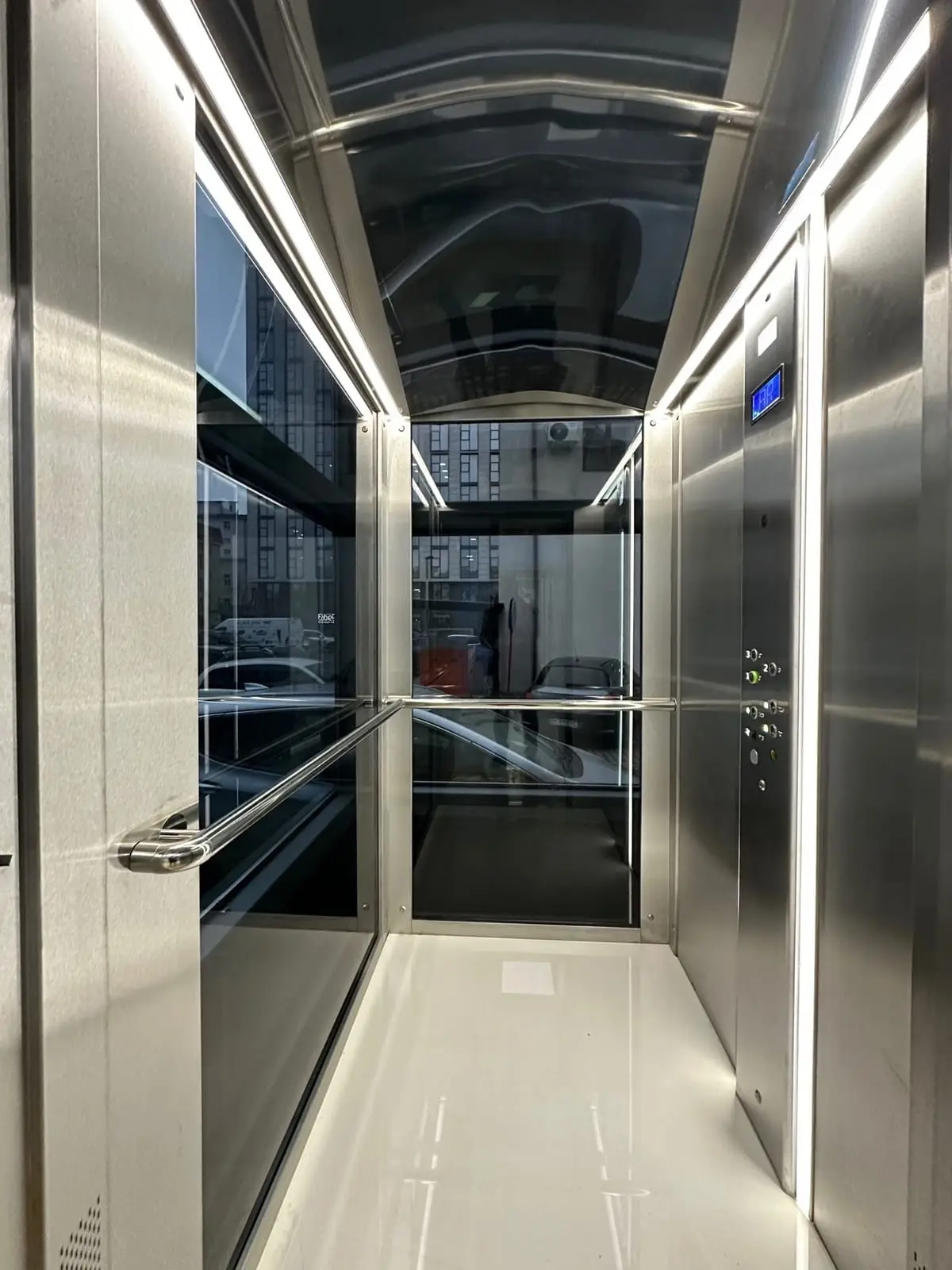
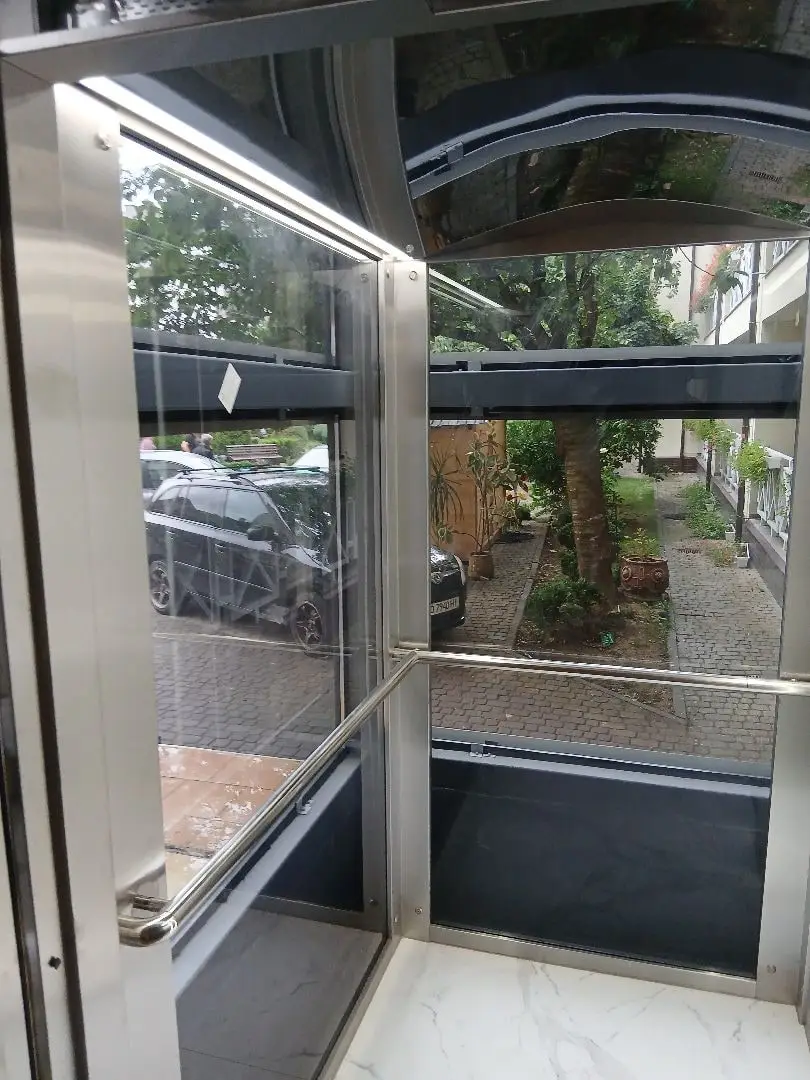
Panels, mirrors, flooring and lighting can be replaced without taking the lift out of service for long - this is the most flexible item in the whole quotation. If you need to save money somewhere today, this is where to do it, not on the drive. We cover the available options and how they hold up in service in a separate article on car design and finishes.
What people don't ask about, but should
- A maintenance contract. A lift may not be operated without a contract with a specialist maintenance company - this trips up every new building where the cost was not budgeted.
- Who will prepare the equipment for inspection and keep the technical passport and logbooks. These documents are checked first, and a defect found on the day of the inspection takes the lift out of service.
- What exactly the warranty does not cover: the consequences of vandalism and flooding, and work on the building's electrical installation up to the main incoming supply. It is better to read where that line is drawn in the contract before signing, not after the pit floods for the first time.
- The condition of the pit. In older buildings it often stands flooded for years, and waterproofing is separate work that is usually missing from the budget.
What you can do without
We will not name specific items from other companies' quotations here - that would be unfair to our colleagues. Instead, here is the principle that makes them easy to spot yourself.
An option is questionable if the seller cannot explain what exactly will change in day-to-day operation. The question is simple: what happens if we don't have it? If the answer sounds like "it will be more modern", that is not an answer. If the answer is specific - "without it the mechanic won't see that the lift has stopped" or "without it a wheelchair won't get into the car" - the option is needed.
The second test: can it be added a year from now without dismantling anything? If so, feel free to postpone it when the budget is tight. If not, decide now.
What to do next
The most useful thing you can do with a quotation in hand is to sort it into these three piles: what is built into the structure, what can be added later, and what nobody can explain. After that, the conversation with the supplier becomes concrete.
If you would like to check your specification, send it to us or simply describe your building. We will tell you plainly what on the list your building really needs and what can be dropped. The site survey and quote are free and come with no obligation.