Knowledge base

Glossary of lift terms

What pit, headroom, safety gear, counterweight, group control and other terms found in lift equipment designs and contracts mean.

  • 6min read

Updated

The terms below appear in builder's work drawings, lift technical passports and maintenance contracts. We have collected the ones clients ask about most often and explained them in plain language.

Shaft and car design

TermMeaning
Lift shaft (hoistway)The vertical space in which the car and counterweight travel
PitThe recess below the lowest landing level - it houses the buffers and the tensioning device
Headroom (top floor height)The distance from the top landing level to the ceiling slab above the shaft
Car depthThe distance between the inner surfaces of the car walls, measured perpendicular to the car width
Through-type carA car with two or more entrances; emergency doors do not count
CounterweightA weight that balances the car and reduces the load on the drive
Guide railsRigid vertical rails along which the car and counterweight travel

Drive and control

TermMeaning
Traction machineAn electromechanical unit with a motor that provides the traction force to move the car
Control systemThe set of devices that make the lift operate
Combined controlStart commands are given both from the car and from the landings
Group controlA system that coordinates the operation of two or more lifts
Inspection modeOperating the lift from the car roof during inspection and repair of equipment in the shaft
Variable frequency controlSmooth control of motor speed - a softer start and more accurate stopping

Safety

TermMeaning
Safety gearA device that brakes, stops and holds the car or counterweight on the guide rails
Overspeed governorTrips when the car overspeeds and actuates the safety gear
BuffersShock absorbers in the pit that cushion the impact if the car travels past its end position
Stopping accuracyThe difference between the car floor level and the landing floor level after the car stops

Operation

TermMeaning
MaintenanceA set of activities that keep the lift in good working order during operation, downtime, storage and transport
RepairRestoring damaged or worn components to working condition
ReconstructionChanging the kinematic layout, rated load or speed of a lift that is already in service
Designated service lifeThe period after which an expert assessment is required - usually 25 years
Remote monitoringA system for communicating with the car and monitoring equipment status from the dispatcher's console

Lift types by purpose

  • Passenger lift - designed to carry people up and down.
  • Goods lift with attendant - carries goods together with an accompanying person.
  • Goods lift with monorail - the car has mountings for an overhead track.
  • Push-type goods lift - the car is raised by a force acting on it from below.
  • Dumbwaiter (service lift) - serves designated floors; people do not enter the car.
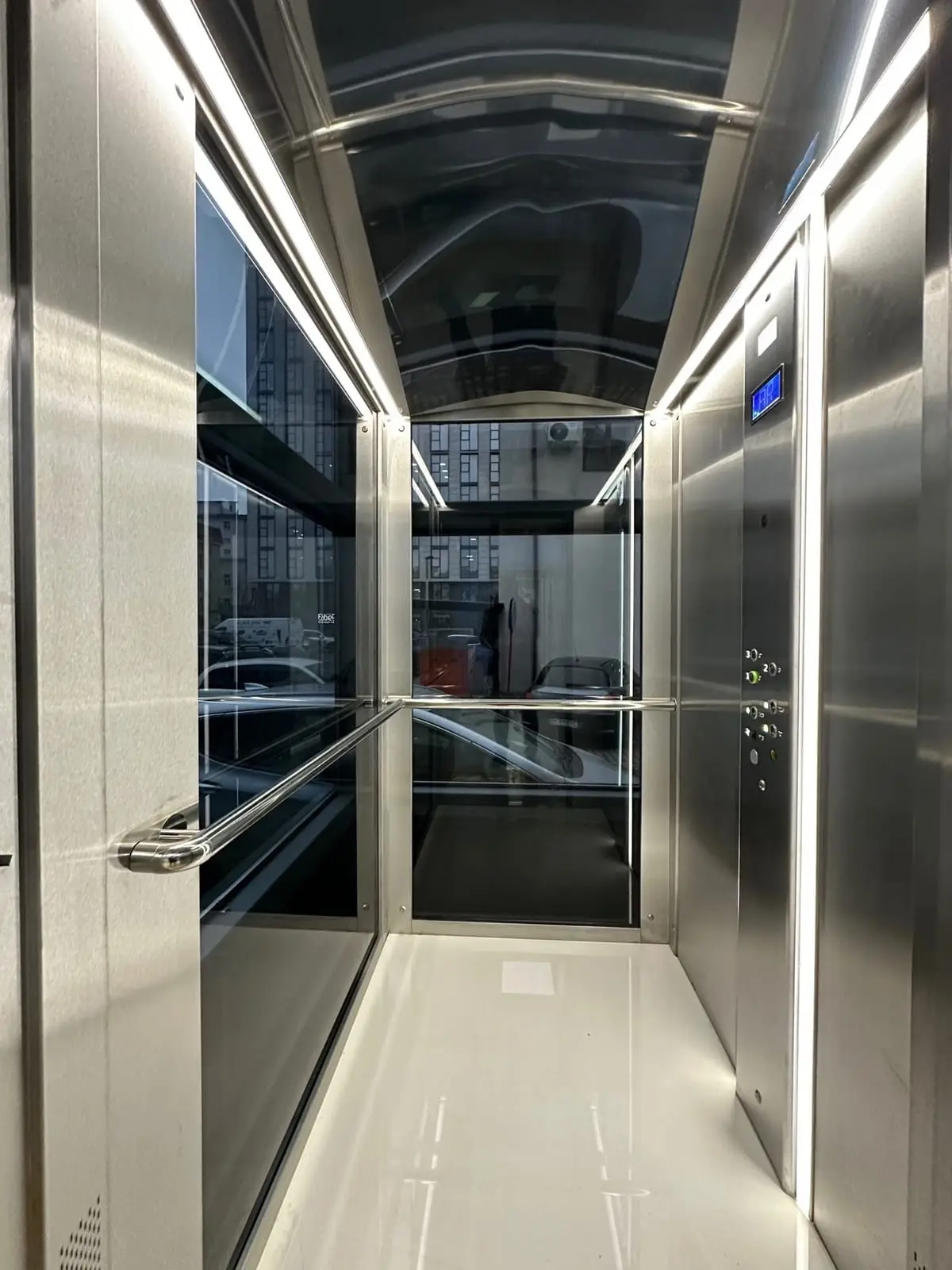
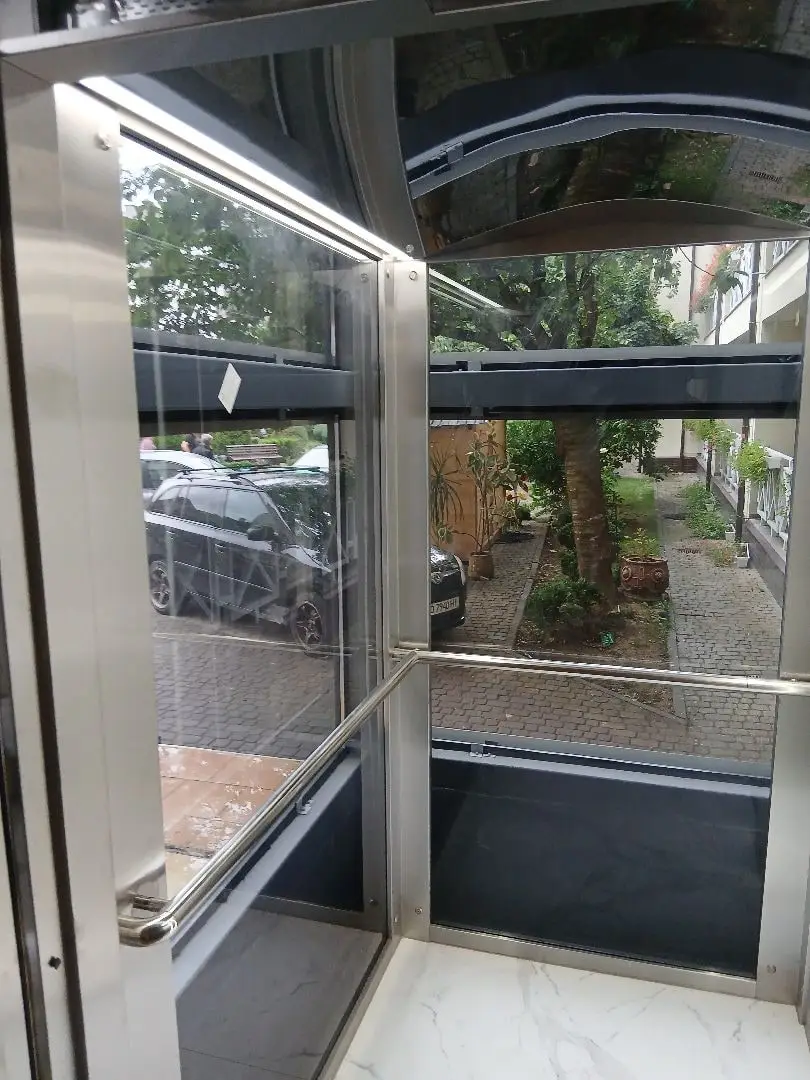
  • Panoramic lift (glass elevator) - has a transparent car and shaft that give a view of the surroundings.
Quick answers

Related questions

What is a lift pit?

The pit is the part of the shaft below the level of the lowest landing. It houses the buffers, the overspeed governor tensioning device and equipment for safe maintenance. For a 1.0 m/s passenger lift, the pit depth is approximately 1200-1400 mm.

Why does a lift need a counterweight?

The counterweight balances the weight of the car plus part of the rated load. Thanks to it, the motor uses far less energy: rather than lifting the full weight of the car, it only has to lift the difference between the car and the counterweight.

Read next

Metron lifts from Greece: the series available and who they suit

Metron from Serres: machine-room-less lifts, series with a pit from 550 mm for older buildings, hydraulic lifts, home lifts and steel shafts. What to know before ordering.

Canny escalators: who the manufacturer is and where they are already in service

Canny Elevator escalators and moving walks for shopping centres, railway stations and metros. How many are produced, which projects the manufacturer showcases and how we choose a model for a building.

MP Mobi home lift: a hydraulic platform lift with car doors

MP Mobi is a vertical platform lift from Spanish manufacturer MP that works like a regular lift (elevator): car doors, one-touch call, pit from 200 mm, up to 1000 kg, battery-powered rescue. Who it suits and where its limits lie.

MP lifts from Spain: who the manufacturer is and why we recommend it

MP lifts from Seville: in-house electronics and traction machines, an open (non-proprietary) controller, EU certificates, two factories. What we check in a manufacturer before offering it to clients, and what ordering an MP lift with installation and service from Portal looks like.

An external lift for a listed heritage building: the Chernivtsi example

The Chernivtsi Regional State Administration building is a monument of national significance. How we added a glass shaft on its own foundation to the courtyard façade, turned windows into doorways and installed an Izamet panoramic lift without a single new opening through the historic wall.

A lift for a private house: the options and what the building decides

A chair stair lift, a home lift with no pit, a PVE pneumatic lift, a Cibes screw-driven platform lift or a hydraulic lift: which of them will actually fit in your house.

The lift has stopped: what passengers, neighbours and the homeowners' association chair should do

What to do when a lift stops: how to act inside the car, why you must not open the doors, who is authorised to carry out a rescue, and what the homeowners' association (OSBB) can do to stop it happening again.

Lift options: what to order up front and what can be added later

A walk through a lift quotation: which options must be planned before installation, which can be added later without rework, and which are worth skipping.

How to choose a lift: a step-by-step guide for clients

What determines the choice of lift: building type, number of floors, rated load, drive type and whether there is a machine room. Practical guidelines and common mistakes.

Lift modernization or full replacement: which to choose

When replacing individual lift components is enough, and when a new lift is cheaper. Decision criteria, timelines and what happens to the shaft.

Lift shaft: dimensions, pit and headroom

Lift shaft plan dimensions, a 1200-1400 mm pit and 3600-4000 mm headroom for a 1.0 m/s lift, and when 50-150 mm is enough. What to measure before pricing.

Lift car design and finishes

What lift cars are made of, which finish options are available and how to choose materials for the building type and intensity of use.

How much lift replacement costs and what makes up the price

Why the price is not quoted over the phone, which items actually make up the cost of a lift replacement, what drives the cost up and which benchmark you can check in the open register.

We'll price your equipment free of charge

Choose what you need: an engineer will contact you within one working day, select a model and calculate the cost.

Or leave your number and we'll call you back

We'll call you within one working day. The site survey and pricing are free of charge.

Or just give us a call: +38 (050) 585-39-28 ·+38 (063) 283-31-48 ·+38 (096) 901-76-50